Metal pipes are in constant contact with moisture: condensation in the basement, small leaks, temperature swings in unheated rooms. Over time the metal oxidises, orange stains appear, and inside the pipe rust narrows the bore and slows the flow. Left alone, corrosion eats through the wall and leads to costly repairs.
The sooner you tackle rust, the less time and effort it takes. A penetrating lubricant loosens the bond between rust and metal, so the deposit comes off easily with a brush and the remains can be smoothed with sandpaper.
What you will need
Important: WD-40 is not intended for contact with drinking water. Flush the inside of water pipes thoroughly after treatment, and preferably treat drinking water pipes only on the outside or after removing them.
Step 1
Assess the pipe and prepare the area
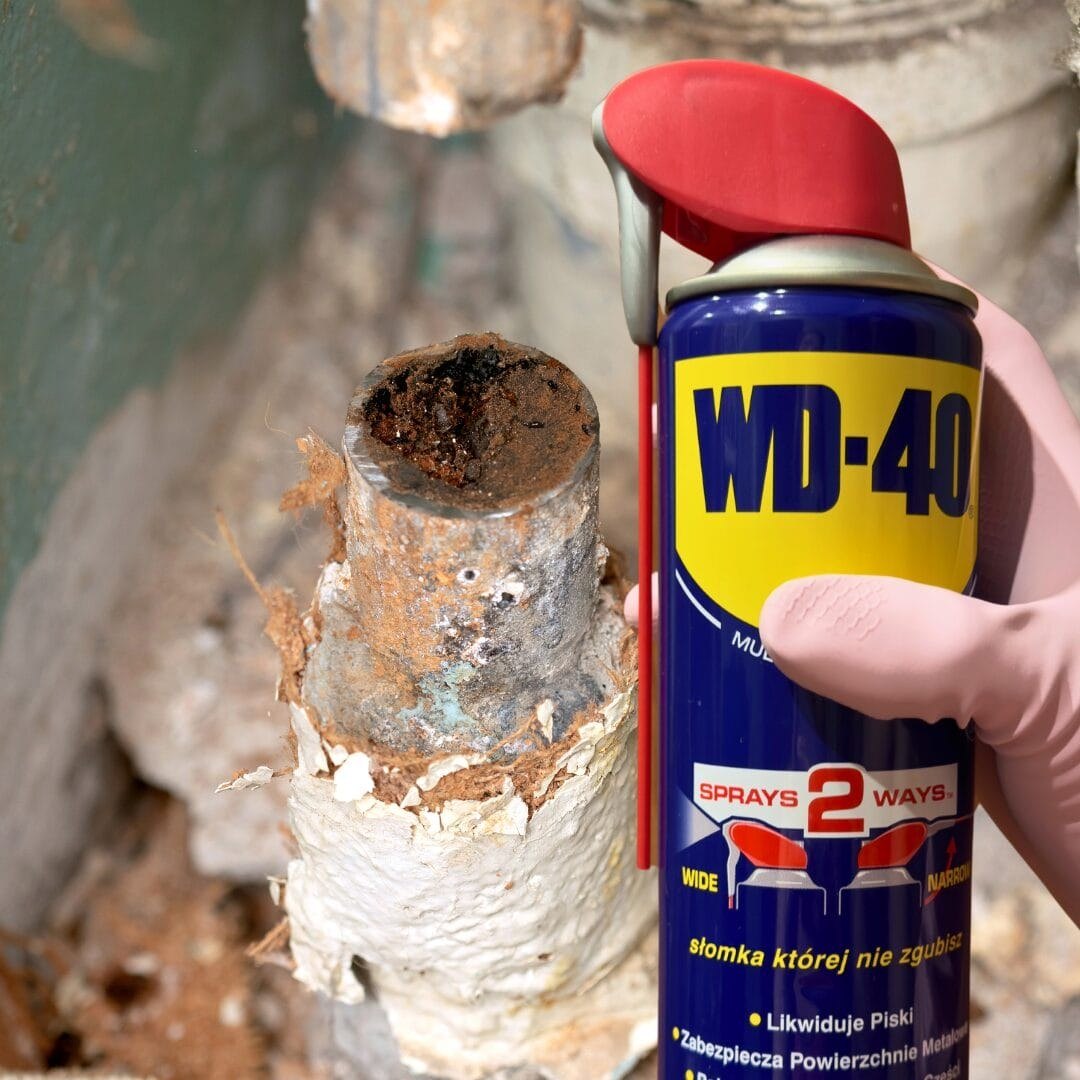
Shut off the water and drain the section you will work on. Inspect the pipe: surface rust comes off easily, while deep pitting or swollen metal means the section is better replaced.
Lay a rag or plastic sheet underneath, as liquid and dirt will drip down along with the rust.
Step 2
Apply the penetrant
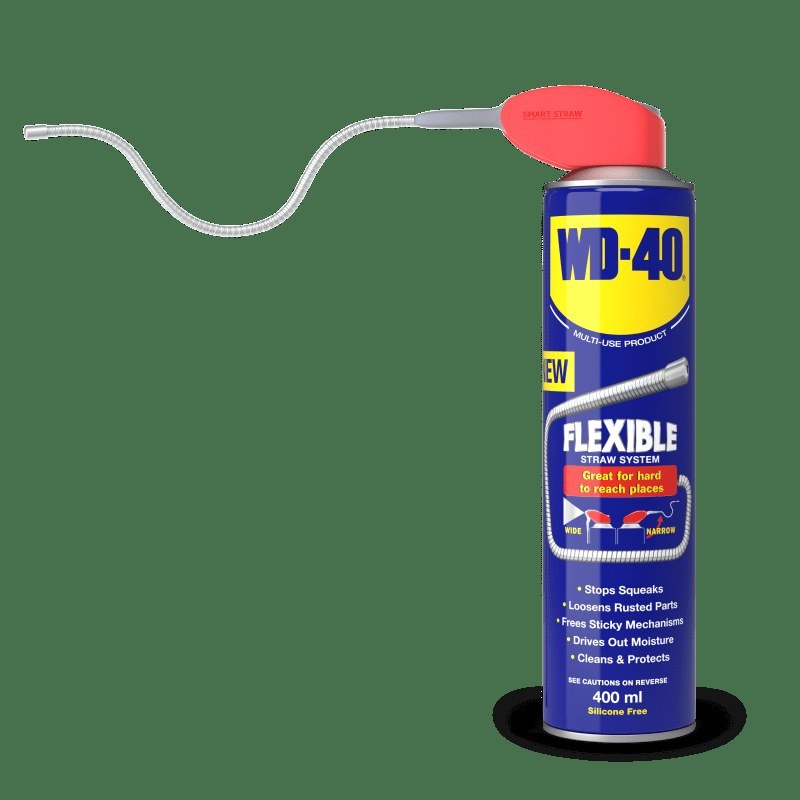
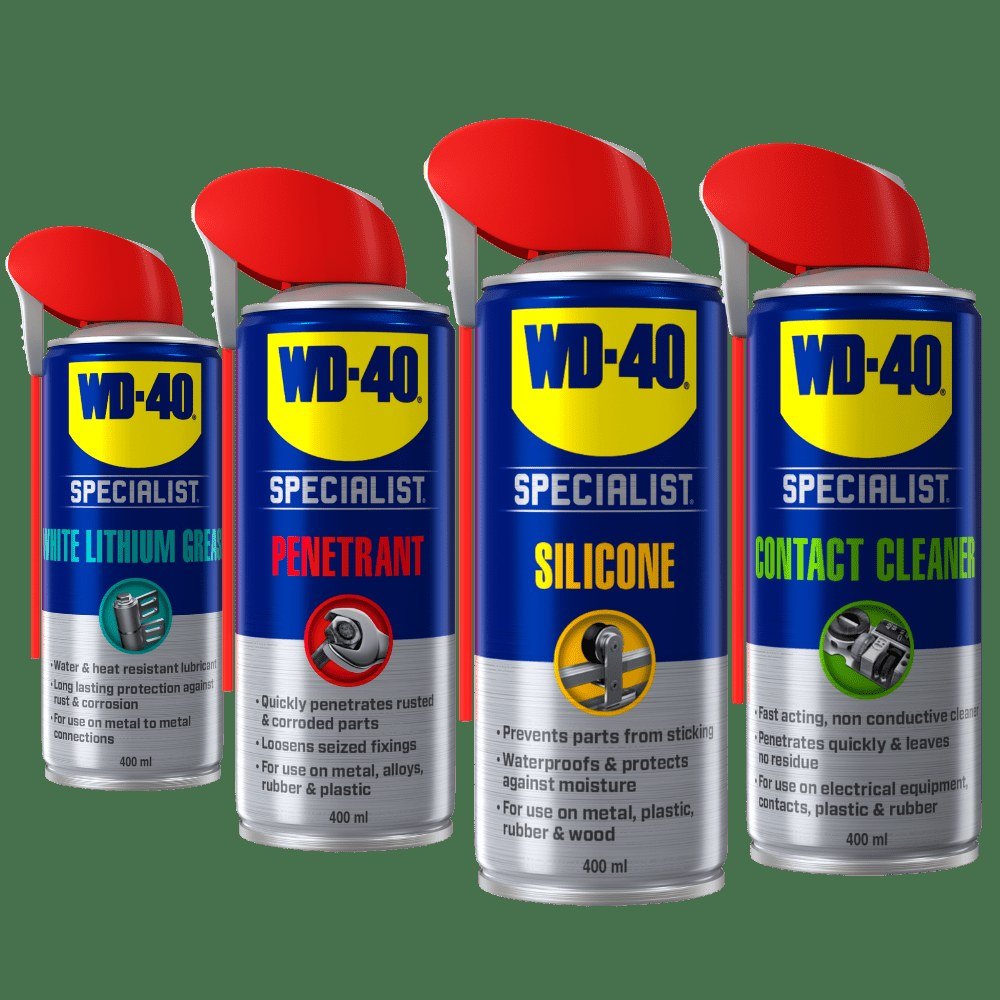
Shake the can and evenly treat all affected areas with WD-40 Specialist Penetrant. For the inside of the pipe and joints close to the wall, WD-40 Smart Straw is handy: with the straw up it gives a precise jet deep inside.
Do not overdo it: a few even coats are enough to cover all the rust.
Step 3
Let it work
Do not start brushing straight away. Leave the pipe for 10-15 minutes so the liquid can soak into the rust and break its bond with the metal. For old, thick corrosion leave it longer and apply a second coat.
Step 4
Brush off the rust
Use a wire brush on the outside and a pipe brush of matching diameter inside. Work along the pipe, removing the rust layer by layer.
If the deposit will not budge, apply more penetrant and wait a few more minutes.
Step 5
Finish with sandpaper
Where the diameter and access allow, go over the surface with sandpaper: medium first, then fine. This removes remaining corrosion and smooths the surface before protection or painting.
Step 6
Flush and protect
Wipe the pipe dry. Flush the inside of water pipes by running water through them for several minutes. After cleaning, the outer surface can be lightly treated with WD-40 Multi-Use: it displaces moisture and holds back new rust until you paint.
Tip: In basements and utility rooms, summer condensation on cold pipes causes as much rust as leaks do. Fitting foam pipe insulation after cleaning noticeably slows corrosion.
What next
Inspect pipes at least twice a year, especially after the heating season and in damp rooms. Small rust spots treated straight away come off in minutes. For couplings and threaded joints seized by rust, the same WD-40 Specialist Penetrant will help.
These uses come from the experience of WD-40 users in many countries. Always follow the instructions and warnings on the product label.
More guides in «How to use».