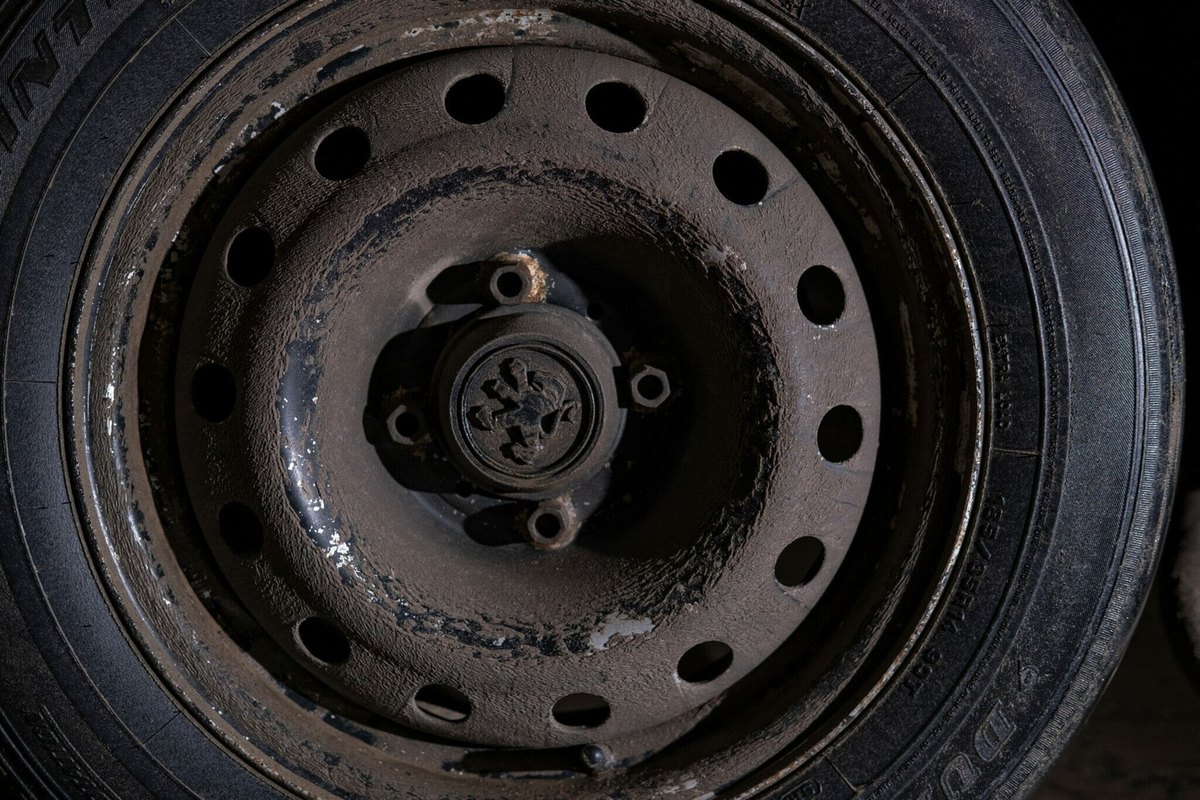
Wheels are among the parts of a car hit hardest by corrosion. Steel wheels rust quickly where the paint is chipped, and alloy wheels, although more resistant, develop white blotches under the lacquer from gravel and salt. A Ukrainian winter with de-icing chemicals on the roads does the damage within one or two seasons.
Depending on how far the rust has gone, a simple treatment or a full refinish will fix it. Here are both options, plus how to look after wheel nuts.
What you will need
- car shampoo, a bucket, a sponge and a wheel brush
- WD-40 Multi-Use
- WD-40 Specialist Penetrant for seized nuts
- a brass brush, a wire brush and sandpaper
- primer and wheel paint (aerosol or spray gun)
- a wheel brace, a torque wrench, a jack and gloves
Important: Keep all products off brake discs, pads and tyre treads: cover them with a cloth and wipe off any overspray at once. When lifting the car, always support it on proper axle stands.
Step 1
Wash the wheels thoroughly
Remove any wheel trims and wash the wheels with car shampoo and a brush, cleaning dirt and brake dust from between the spokes and around the hub. This matters most after winter, as salt residue keeps eating the metal even in a garage. Rinse and let them dry.
Step 2
Treat light rust
If there are only orange spots and surface bloom with no damage to the metal, spray those areas with WD-40 Multi-Use, leave it for a few minutes and go over them with a brush. It softens the deposit, drives moisture out of hairline cracks in the paint and leaves a protective film that slows further corrosion. Wipe off the excess so it does not collect dust.
Step 3
Remove deep rust
If the rust has eaten into the surface, a spray treatment is not enough. Have the tyre removed at a tyre shop so you can work on the wheel freely. Take the rust back to bare metal with a wire brush and sandpaper, degrease and apply metal primer.
Step 4
Repaint the wheel
On the clean, primed wheel, apply wheel paint from an aerosol or spray gun in several thin coats, allowing drying time between them. A car paint shop can match the colour. Only refit the tyre once the paint is fully dry.
Step 5
Look after the nuts and bolts
Wheel nuts and bolts rust too and seize over time. Remove them one at a time, soaking any seized ones first with WD-40 Specialist Penetrant for a few minutes. Clean them with a brass brush, inside as well, treat the outer surfaces with WD-40 Multi-Use and wipe the threads dry. Tighten to the torque specified by the car maker using a torque wrench.
Step 6
Care for alloy wheels
Alloy wheels rarely rust, but gravel chips the lacquer and salt then corrodes the alloy beneath it. Touch up chips straight away, and after washing spray any corrosion marks and the hub area with WD-40 through the WD-40 Smart Straw to hit exactly the right spot without reaching the brakes.
Tip: At each seasonal tyre change, treat the hub mounting face and the wheel centre bore with WD-40: next time the wheel will come off easily instead of having to be knocked free.
What next
Wash the wheels regularly, especially in winter, inspect them at every tyre change and treat new rust marks straight away. Dealing with light rust takes about half an hour, and the wheels last much longer.
These uses come from the experience of WD-40 users in many countries. Always follow the instructions and warnings on the product label.
More guides in «How to use».