Pop-up lawn sprinklers work in tough conditions: sand, clay, hard water and big temperature swings. A typical spring problem is a head that will not rise or, the opposite, will not retract after watering and gets broken by the mower.
Most of these faults are cured by simple maintenance: cleaning, lubrication and a check of the controller. Ideally do it twice a year, before and after the season.
What you will need
Important: Turn off the water supply and unplug the controller before you start. Keep silicone lubricant off paving and steps, as it makes them slippery.
Step 1
Remove and dismantle the head
Close the tap, unscrew the sprinkler from its base and drain the water. Plug the threaded base straight away, or cover it with a bag, so no soil gets in.
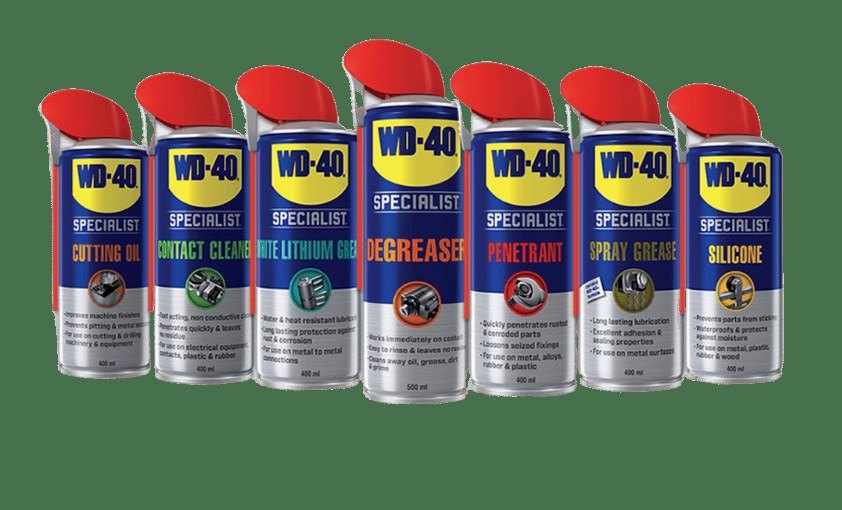
The body consists of an adjustable head where the jet comes out and a canister holding the return spring. Unscrew the head and check for sand, grit or roots inside. Rinse the parts with clean water, dry them and lubricate the assembly with WD-40 Specialist Silicone before reassembling.
Step 2
Lubricate the sprinkler body
The telescopic riser is pushed up by water pressure and returned by a steel spring. As it moves it slides through the annular seal of the body, and friction here must be as low as possible.
After cleaning, apply WD-40 Specialist Silicone to the riser and pull it out and push it back several times to spread the lubricant evenly. Without this, sprinklers jam during the first spring cycles, fail to pop up or stay raised. Repeat in midsummer.
Step 3
Service the controller
If the control unit is outdoors, remove the batteries at the end of the season (unless it runs from the mains through a transformer). Treat the accessible boards and terminals with WD-40 Specialist Contact Cleaner: it removes dirt and moisture and evaporates quickly.
Protect metal terminals and box fixings with a thin coat of WD-40 Multi-Use, and apply silicone lubricant to the rubber seals of the water connections.
Step 4
Check and prepare the lines
Intact underground pipes need no special care. Frost does most damage where pipes come above ground: by the controller, the tap and the sprinklers themselves. Wrap these sections in pipe insulation.
Never leave the system pressurised over winter: drain or blow out the lines and leave the valves open so ice cannot split pipes and fittings.
Tip: If a head starts spraying off line, check the mesh filter underneath first: it is usually clogged with sand and just needs rinsing.
What next
Service the sprinklers in spring before the first watering and in autumn before the frosts, and repeat the WD-40 Specialist Silicone treatment in summer. The system will then run for many seasons without new heads.
These uses come from the experience of WD-40 users in many countries. Always follow the instructions and warnings on the product label.
More guides in «How to use».