A snow blower is a lifesaver where snow falls heavily and often and shovelling is no longer realistic. Single-stage machines use the auger both to gather and throw the snow; two-stage machines add an impeller behind the auger that accelerates the snow out through a rotating chute. The first suits light snowfall, the second heavy, packed snow.
Both have many moving parts working constantly in snow, meltwater and road salt. So maintenance starts with a thorough wash and dry, followed by lubricating every mechanism.
What you will need
Important: Before servicing, stop the engine, remove the key and pull off the spark plug cap. Never clear the chute or auger by hand, even with the engine off: stored tension in the drive can turn the impeller. Always use the clean-out tool.
Step 1
Wash and dry the machine
After use, rinse off snow, ice and salty slush with warm water, especially from the auger housing, chute and frame. Salt from pavements and roads is metal's worst enemy.
Let the machine dry fully somewhere warm, then treat exposed metal with WD-40 Multi-Use: it displaces remaining moisture and protects against corrosion.
Step 2
Lubricate the auger
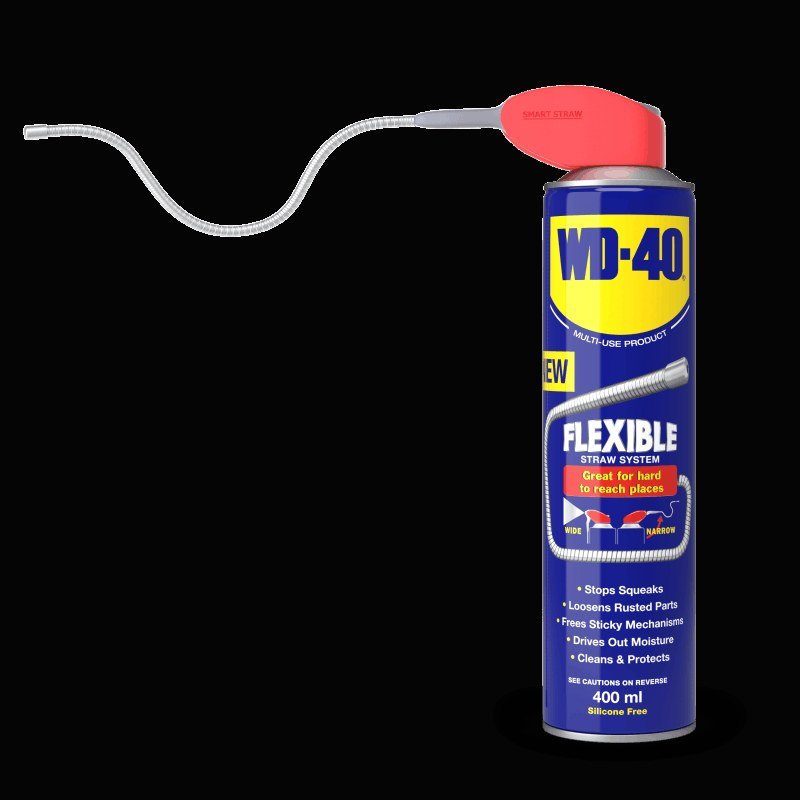
The auger turns on two end pins in bearings and is driven by gears. Lubricate these with WD-40 Multi-Use, using a thin straw to reach the bearings behind the housing.
Also check the shear bolts holding the auger to its shaft: they are designed to break if you hit a stone or kerb, protecting the gearbox. Keep spares to hand.
Step 3
Treat the chute and impeller
The chute base rotates on a wide ring; lubricate its mechanism and the adjustable deflector at the top of the chute in the same way.
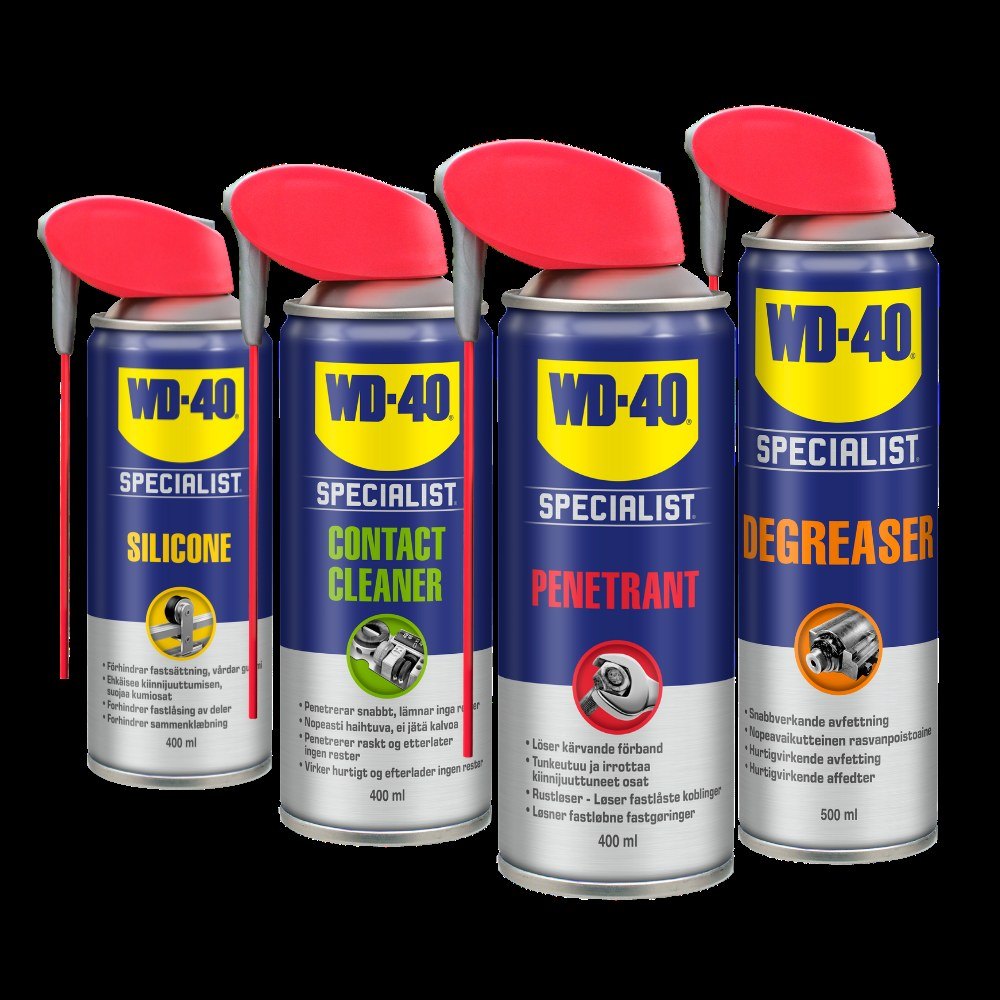
On two-stage machines, the impeller shaft running from the engine behind the auger is treated the same way. Coat the inside of the chute and auger housing with WD-40 Specialist Silicone: wet snow sticks to it less and does not clog the discharge.
Step 4
Look after levers and cables
Clutch and control levers are connected by cables in outer sleeves. Lubricate the lever pivots with multi-use lubricant and treat the exposed cable where it enters the sleeve with silicone so moisture cannot freeze and lock it.
Keep the worm-drive adjusters for chute rotation and auger height clean. Grease their gears and pivots with WD-40 Specialist White Lithium Grease, which does not stiffen in the cold.
Step 5
Check the battery and electrics
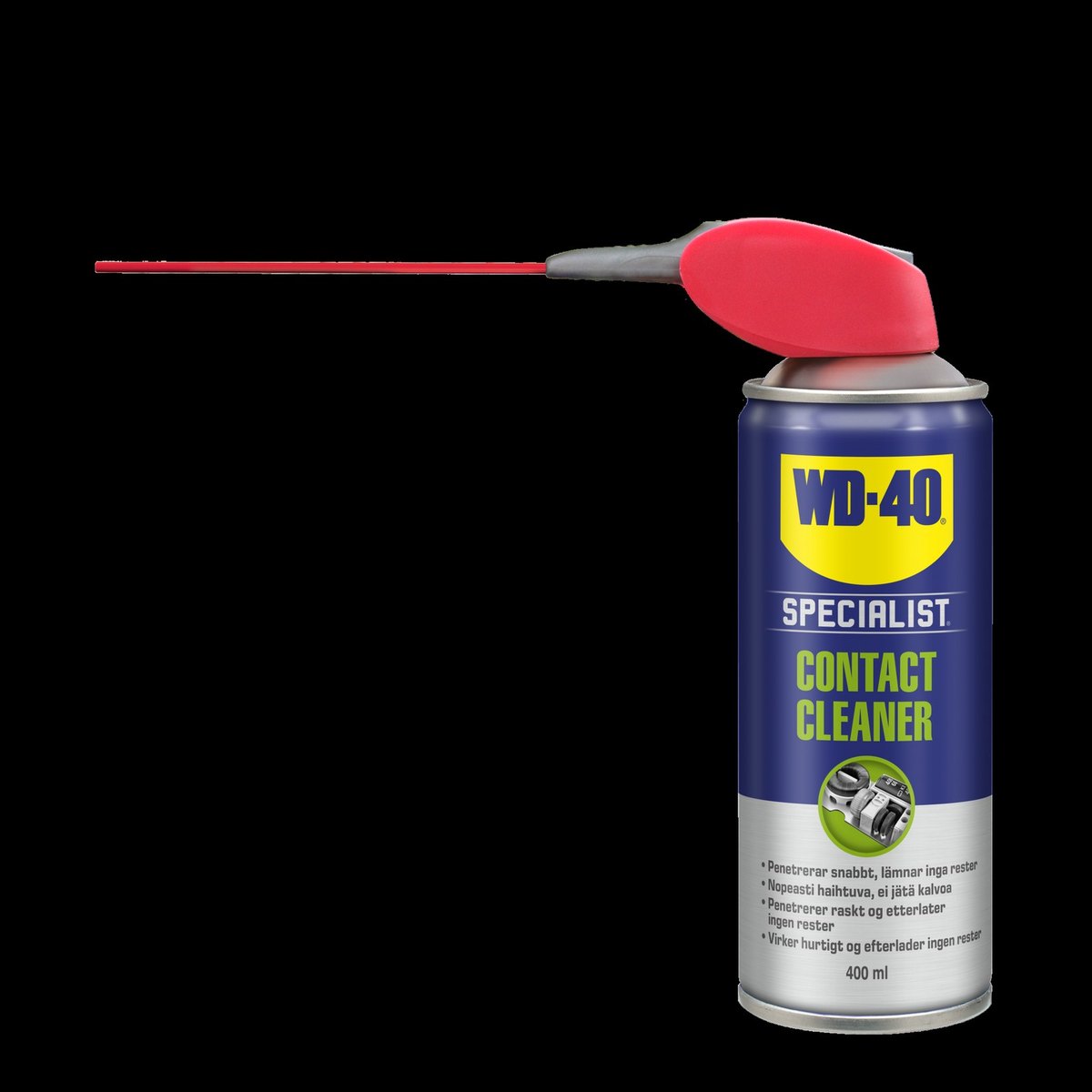
On electric-start models, keep the battery charged: it drains faster in the cold. Clean the terminals and connectors with WD-40 Specialist Contact Cleaner: it penetrates hard-to-reach spots, dries quickly without residue and restores conductivity.
Only reconnect once the cleaner has fully evaporated.
Tip: Before heading out in a snowfall, spray silicone into the chute and onto the auger blades. A minute's work saves constant stops to clear a blocked discharge.
What next
Wash and dry the snow blower after each use and lubricate its mechanisms monthly through the winter. In spring, drain the fuel, treat all metal with a protective lubricant and store the machine somewhere dry until next season.
These uses come from the experience of WD-40 users in many countries. Always follow the instructions and warnings on the product label.
More guides in «How to use».