We use many kinds of knife every day: a serrated bread knife, a long carving knife, a small paring knife, a folding pocket knife or a camping knife. They range from cheap plastic-handled ones to costly handmade carbon steel blades, but the rule is the same: a knife should be sharp and free of defects.
A blunt knife is more dangerous than a sharp one. You have to press harder, the blade slips off the food and cuts your hand instead. So inspect and touch up your knives regularly rather than waiting until they will not cut a tomato.
What you will need
- dual-grit water whetstone
- fine abrasive paper (around 800 grit)
- paper towels
- WD-40 Multi-Use for cleaning off rust
- WD-40 100 ml for folding knife pivots
- blade guards or a wooden knife block
Important: After treating kitchen knives with WD-40, always wash them in hot soapy water and dry them before they touch food. When sharpening, move the blade away from you and keep your fingers clear of the edge.
Step 1
Inspect the knives
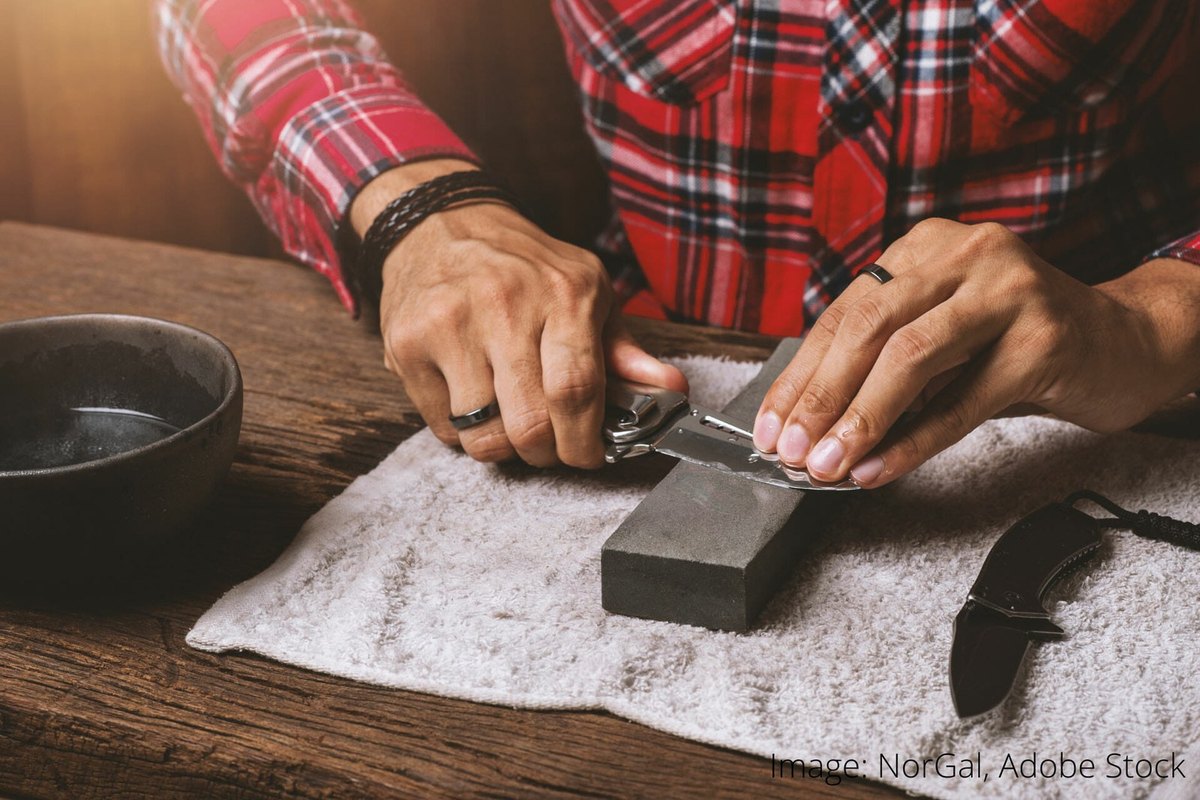
Check sharpness and the condition of the blade: the edge should have no chips and the flats no rust. Draw the edge lightly across a sheet of paper: a sharp knife slices it cleanly, a blunt one crumples and tears it. Serrated bread knives are not sharpened on a flat stone; they need a tapered sharpening rod.
Step 2
Sharpen on the coarse side
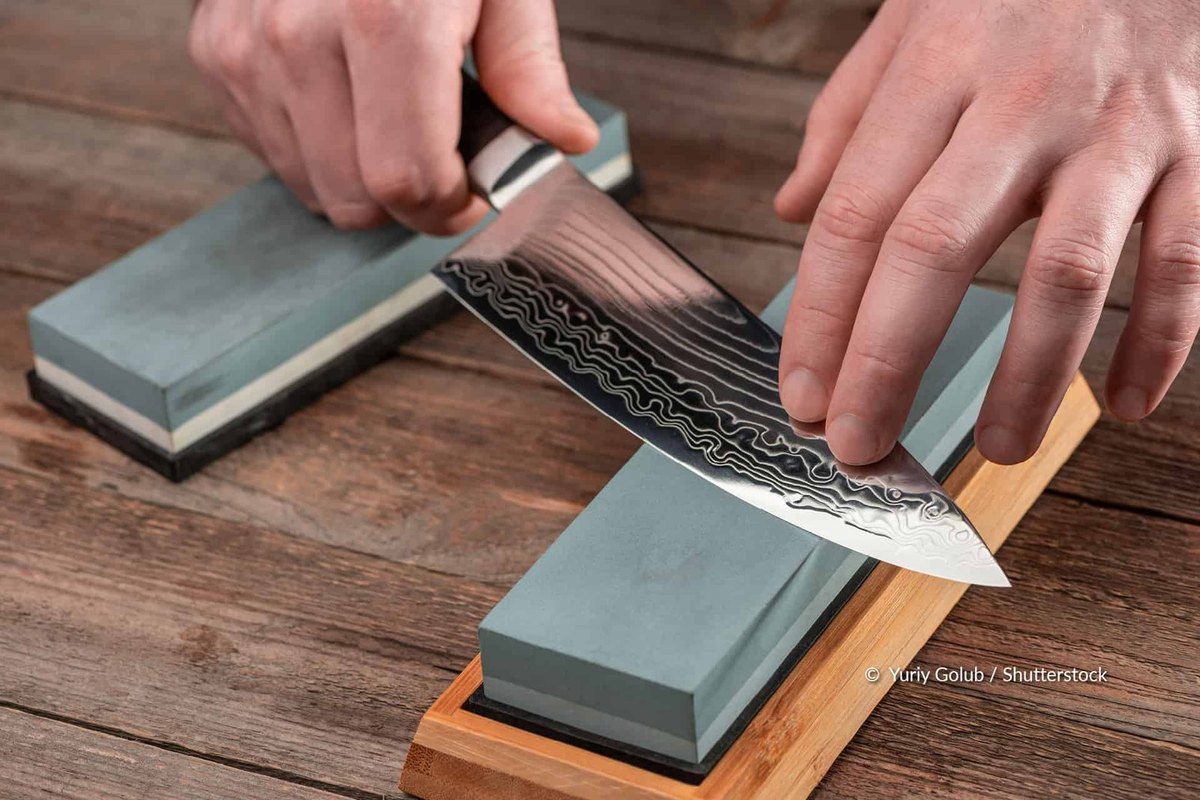
Soak the water stone for 5 minutes, until it stops releasing bubbles. It removes metal gently without overheating the steel. Place it coarse side up on a damp towel so it does not slide.
Hold the knife at roughly 15 to 20 degrees to the stone and draw the blade from heel to tip as if shaving off a thin slice. Make the same number of strokes on each side until you can feel a slight burr along the whole edge.
Step 3
Refine the edge on the fine side
Turn the stone over to the fine side and repeat the same strokes with lighter pressure to remove the burr and small irregularities. Do not press hard, and test the sharpness carefully from time to time. Finally rinse the knife and wipe it with a paper towel to remove metal dust.
Step 4
Remove rust spots
Oxidation spots often appear on the flats and especially where the blade meets the handle, where water collects. Wet the spot and rub it gently with fine abrasive paper, keeping away from the edge.
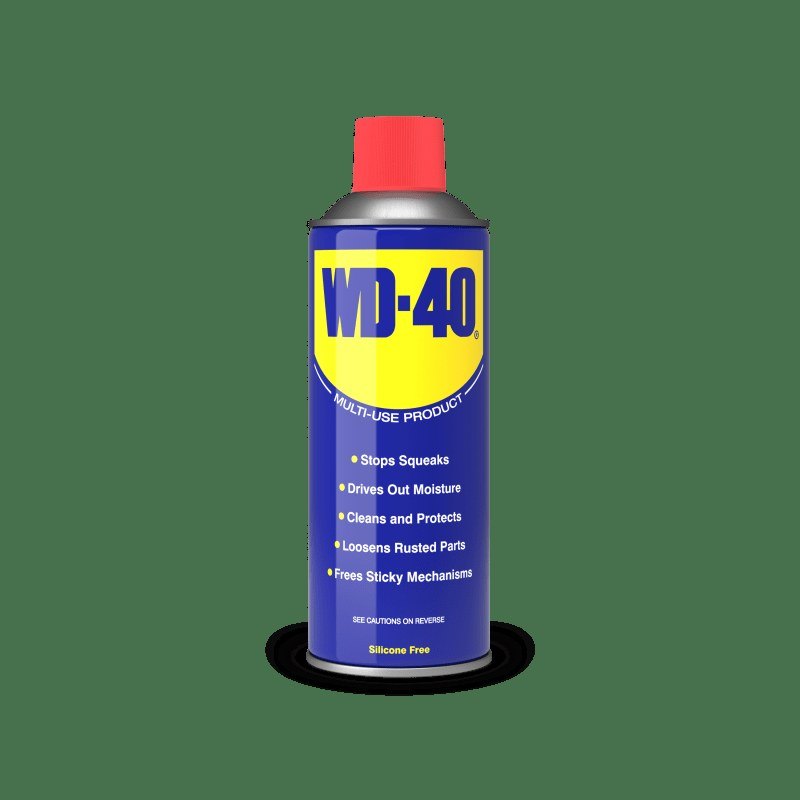
For stubborn marks, put a little WD-40 Multi-Use on a paper towel and wipe the blade: it softens the deposit and drives moisture out of the gap by the handle. Then wash a kitchen knife thoroughly with detergent and dry it.
Step 5
Protect the blade in storage
Do not throw knives into a drawer with other metal: the edge soon dulls against forks and other blades. Use full-length blade guards, a slotted wooden block or a magnetic strip. Keep knives dry, especially in a humid kitchen.
Step 6
Look after folding knives
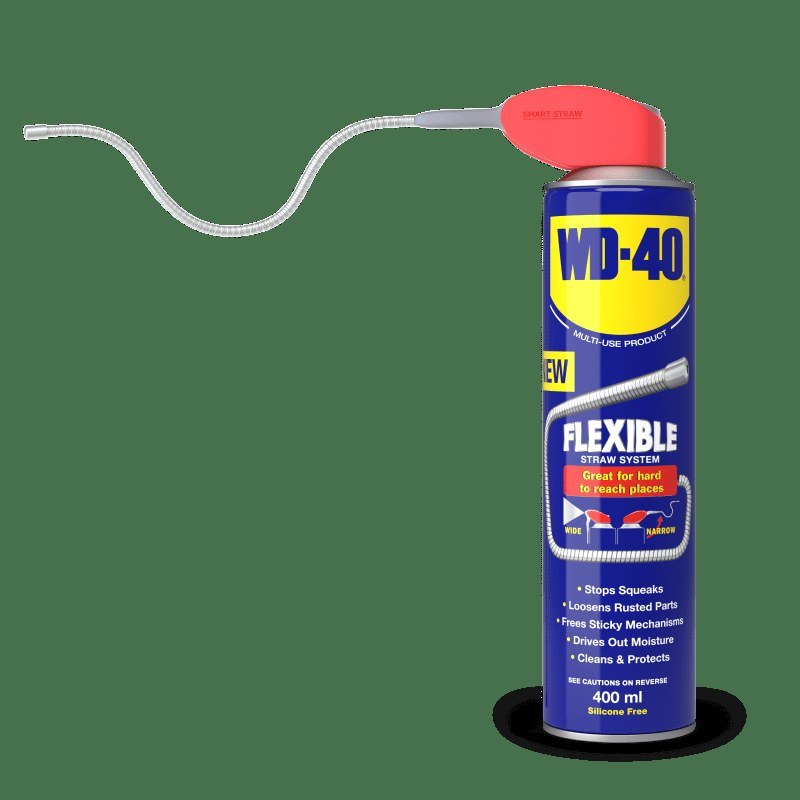
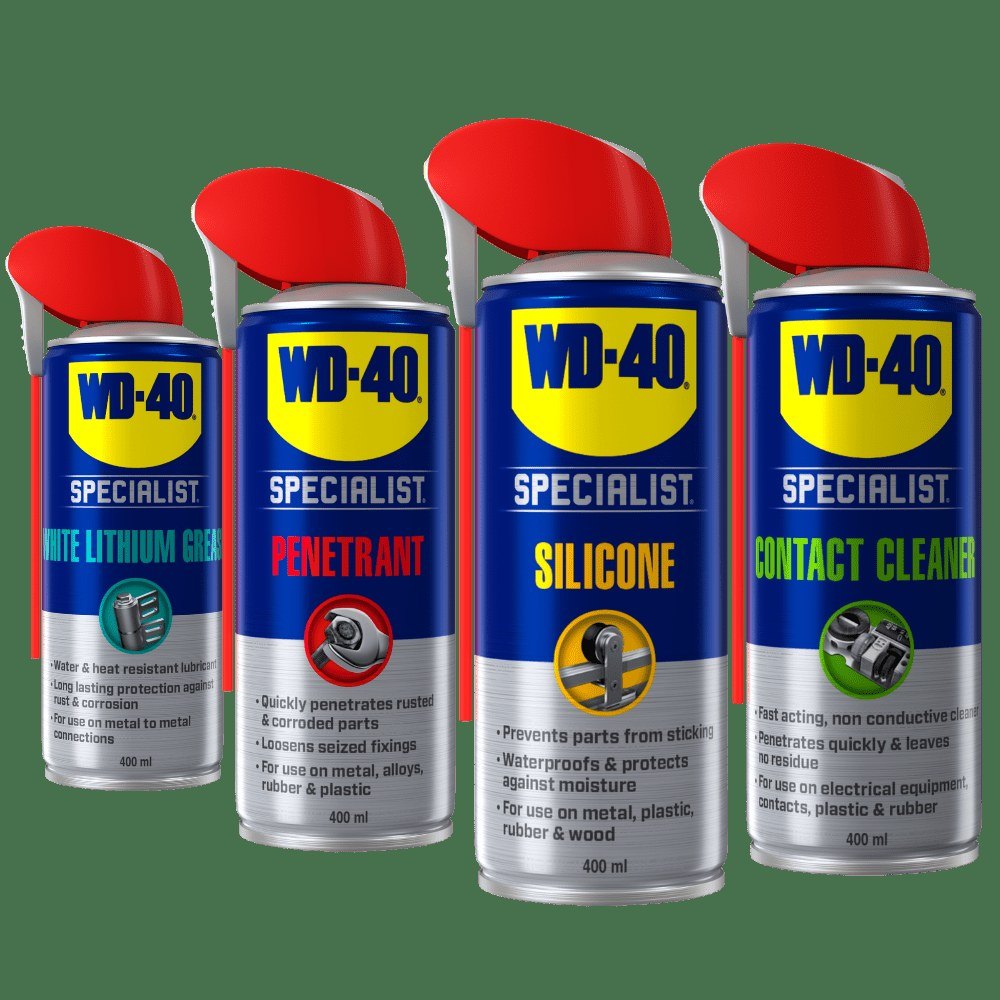
In folding and multi-tool knives, dirt and moisture collect in the pivots and the blade becomes stiff to open. Put a drop of WD-40 100 ml into the pivot, open and close the blade several times and wipe off the excess. It displaces moisture and protects against corrosion. If the knife is used for food, wash the blade before use.
Tip: Between sharpenings, hone the edge on a steel before every big chopping session. The knife stays sharp longer and you will only need the stone every few weeks.
What next
Kitchen knives in daily use need touching up every one or two months; folding and camping knives after every trip. Treat the pivots of folding knives, scissors and secateurs with WD-40 100 ml a few times a season, especially after damp weather.
These uses come from the experience of WD-40 users in many countries. Always follow the instructions and warnings on the product label.
More guides in «How to use».