A home electrical system has many parts: cables, terminals, breakers, sockets, switches and junction boxes. Wherever there is a connection, it can loosen, oxidise and heat up over time.
Most minor faults come down to a poor contact rather than broken wiring. You can find and fix that yourself, while anything more serious should be left to a qualified electrician.
What you will need
Important: Only work with the main switch off and the absence of voltage confirmed. Do not open the consumer unit or touch the incoming supply cable: that is an electrician's job.
Step 1
Find where the problem is
Check the consumer unit to see whether a breaker or RCD has tripped. If a breaker trips as soon as you reset it, unplug everything on that circuit and plug items back in one by one to find the culprit.
If only one socket or switch is dead while the rest of the circuit works, the fault is most likely a contact right there.
Step 2
Isolate the power
Switch off the main switch for the flat or house and confirm with a tester that there is no voltage where you will work.
Tell everyone at home and, if possible, put a note on the consumer unit so nobody switches the power back on.
Step 3
Check the socket or switch
Remove the cover and carefully pull out the mechanism. Look for a wire that has come out of its terminal, loose screws, or darkened or melted insulation.
Treat the terminals with WD-40 Specialist Contact Cleaner: it removes dust, oxidation and condensation, evaporates quickly, is non-conductive and is safe on metals, plastics and rubber. Refit the wires and tighten firmly. Replace a damaged mechanism.
Step 4
Leave junction boxes to a professional
Junction boxes in the wall join groups of wires, often with old twisted connections. If a box is accessible and you see oxidation, with the power off you can treat the joints with contact cleaner without taking them apart.
Reconnecting, replacing twisted joints with proper connectors and any work on aluminium wiring should be done by an electrician.
Step 5
Protect outdoor and damp points
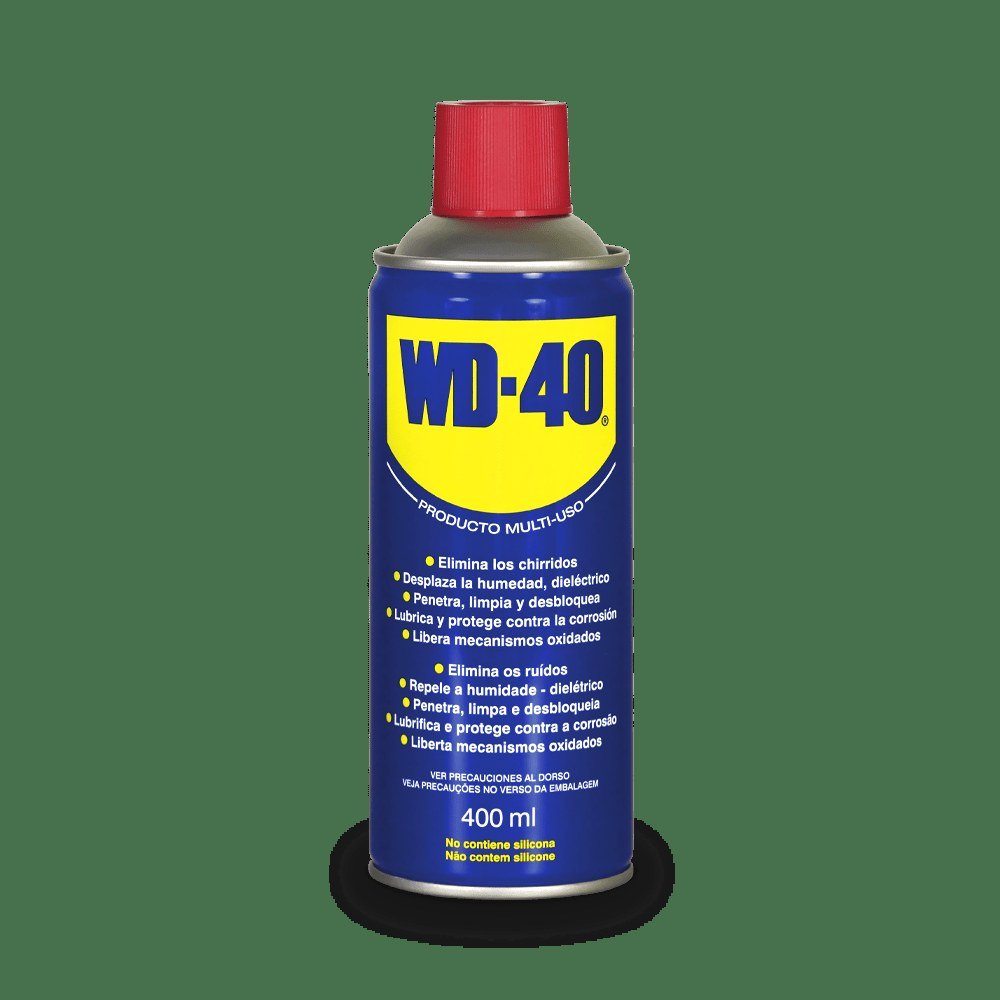
Sockets and lights outdoors, in garages and cellars suffer from moisture and condensation. After cleaning the contacts, treat metal housings, screws and brackets with WD-40 Multi-Use: it displaces moisture and protects against rust.
For precise application in awkward spots, use WD-40 Smart Straw. Check that seals and covers are intact.
Step 6
Switch on and monitor
Restore the power and check everything works. After an hour under load, touch the cover: a warm socket or a burning smell means the contact is still poor.
If the problem returns, a breaker trips with nothing connected or there is sparking in the consumer unit, call an electrician immediately.
Tip: Once a year, with the power off, retighten the screws in sockets that feed heaters, water heaters and washing machines. Under heavy loads, a loose contact is always the first to heat up.
What next
Keep WD-40 Specialist Contact Cleaner at home for routine contact care, and WD-40 Multi-Use for metal parts in damp rooms. And remember: if in doubt, an electrician costs far less than a fire.
These uses come from the experience of WD-40 users in many countries. Always follow the instructions and warnings on the product label.
More guides in «How to use».