An electric scooter faces city dust, puddles, kerbs and, in autumn and winter, road salt every day. Without care, the folding mechanism, brakes and contacts suffer first: the stem develops play, things squeak and the electrics start to misbehave.
Most jobs take 20-30 minutes and need no workshop. Below is a checklist worth running monthly, with at least a quick wipe-down after wet rides.
What you will need
Important: Switch the scooter off and unplug the charger before any work. Never wash it with a hose jet or pressure washer, do not spray products into the battery housing or hub motor, and keep lubricants away from brake discs, pads and tyres.
Step 1
Look after the battery
Use only the original charger and avoid running the battery completely flat. Charge once the scooter has cooled down after a ride, not immediately.
Store the scooter somewhere dry at room temperature. In winter, let a cold battery warm up indoors before charging. If range drops noticeably and the battery gets warm, have it checked by a service centre.
Step 2
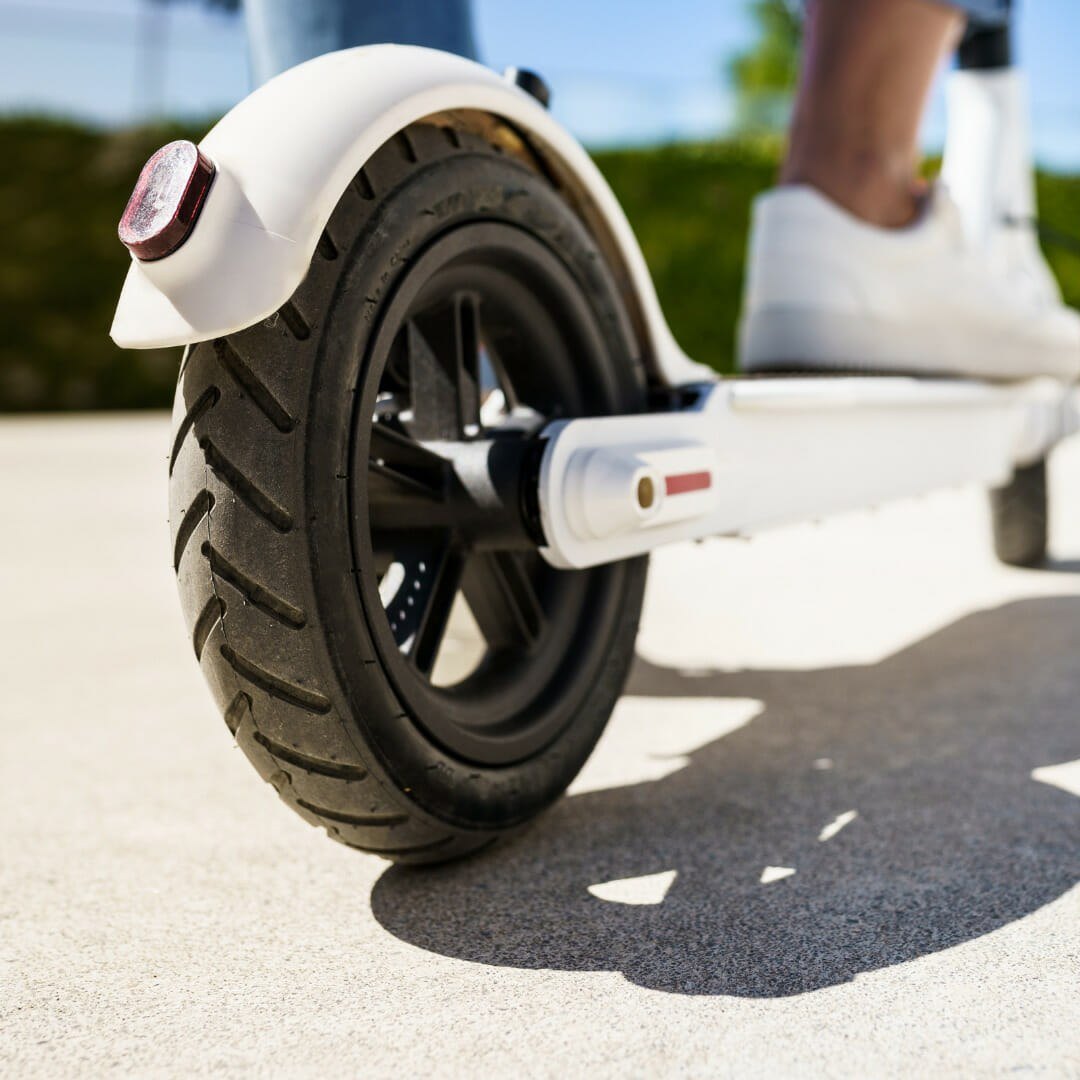
Check the tyres
Inflate pneumatic tyres to the manufacturer's pressure: an underinflated tyre wears faster, grips worse and drains the battery quicker. Inspect solid and puncture-proof tyres for cracks and cuts.
Check them monthly and replace worn or damaged tyres straight away.
Step 3
Inspect the brakes
Disc brake pads sit low and pick up dirt quickly. Wipe the disc and caliper with a damp cloth, then dry them.
Signs of wear include a longer lever travel, squealing, vibration or weaker braking. Adjust the cable or replace the pads if needed.
Step 4
Clean the body without a pressure jet
Wipe the deck, frame and handlebar with a damp sponge and mild soapy water, avoiding the battery area, display and connectors. Dry everything with microfibre so no moisture stays in the gaps.
After winter rides, pay attention to the underside of the deck and the fasteners: salt residue quickly causes corrosion.
Step 5
Lubricate the folding joint and stem
The folding mechanism suffers most from grime. Apply WD-40 Multi-Use, leave it a few minutes, wipe away the loosened dirt and repeat while folding and unfolding the scooter several times.
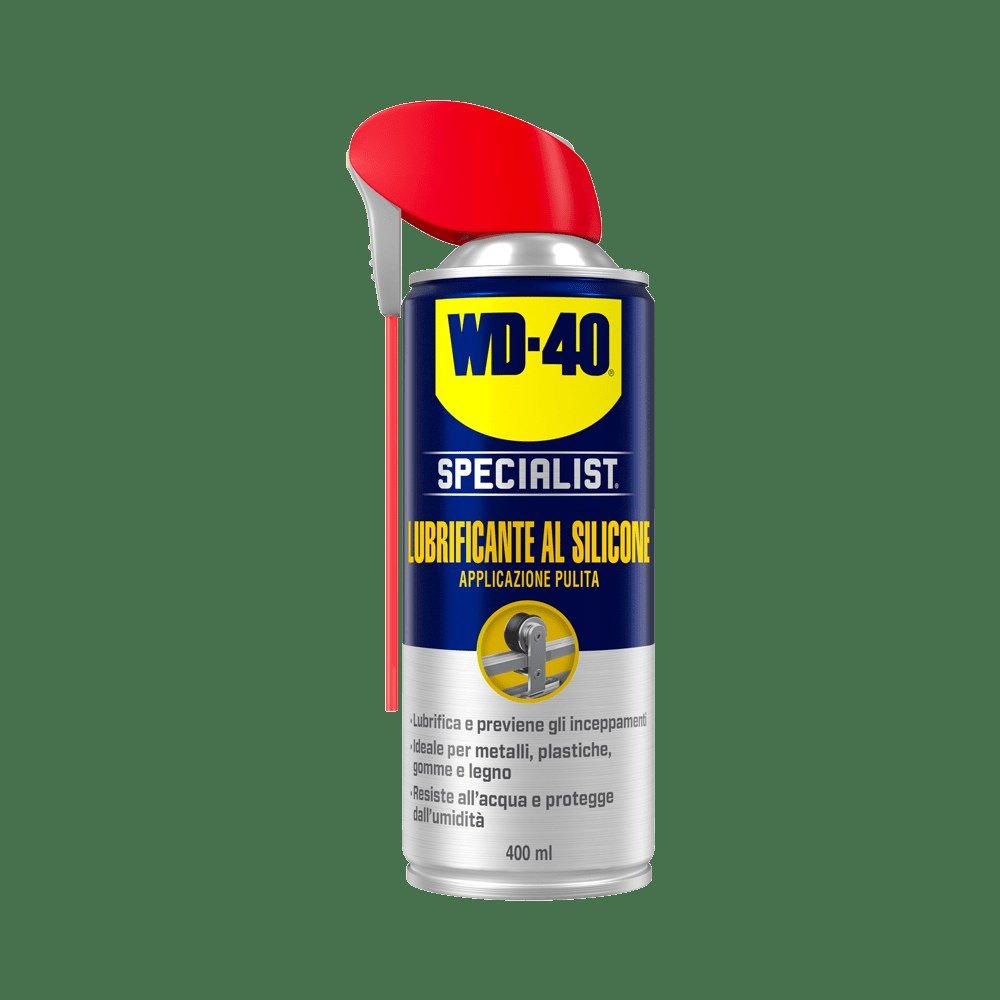
Treat the stem, suspension pivots and rubber seals with WD-40 Specialist Silicone through the straw. Silicone repels moisture and does not attract dust. Wipe off any excess.
Step 6
Clean the contacts
Spray the charging port and accessible wiring connectors with WD-40 Specialist Contact Cleaner: it removes dust, oxidation and moisture and evaporates quickly without leaving a film. Only plug in the charger once everything is completely dry.
Tip: Once a month, go over every accessible bolt with an Allen key: handlebar, stem, mudguard and kickstand fixings. Vibration on cobbles slowly loosens them, and that is where most squeaks and play come from.
What next
Run this check monthly, and after wet or salted roads at least wipe the scooter down and treat the folding mechanism with WD-40 Multi-Use. Before winter storage, charge the battery to roughly half and protect metal parts with WD-40 Specialist Silicone.
These uses come from the experience of WD-40 users in many countries. Always follow the instructions and warnings on the product label.
More guides in «How to use».