Flickering headlights, failing sensors, starting problems or erratic electric windows are often caused not by expensive control units but by dirty, oxidised connectors. In Ukraine, moisture, road dirt and winter de-icing chemicals that find their way under the bonnet and into the wheel arches speed this up.
A car's electrics are sensitive: the wrong product or rough cleaning can damage contacts, insulation or rubber seals. WD-40 Specialist Contact Cleaner is made for exactly this job: it dissolves dust, oil, moisture and oxidation and evaporates quickly without leaving a film.
What you will need
Important: Before you start, switch off the engine, remove the key and disconnect the negative battery terminal. Do not spray onto a hot engine or near naked flames, and work with the bonnet open.
Step 1
Isolate the car's electrics
Switch off the engine, let the engine bay cool and remove the negative terminal from the battery. This rules out short circuits while you work on connectors. Wear safety glasses, as the product comes out under pressure.
Step 2
Find the problem connectors
Start with whatever is playing up: headlight and tail-light connectors, sensors, the fuse box, earth points on the body. Unplug the connector by pressing its catch and inspect the contacts: green or white deposits, darkening or dirt mean it is time to clean them.
Step 3
Apply Contact Cleaner
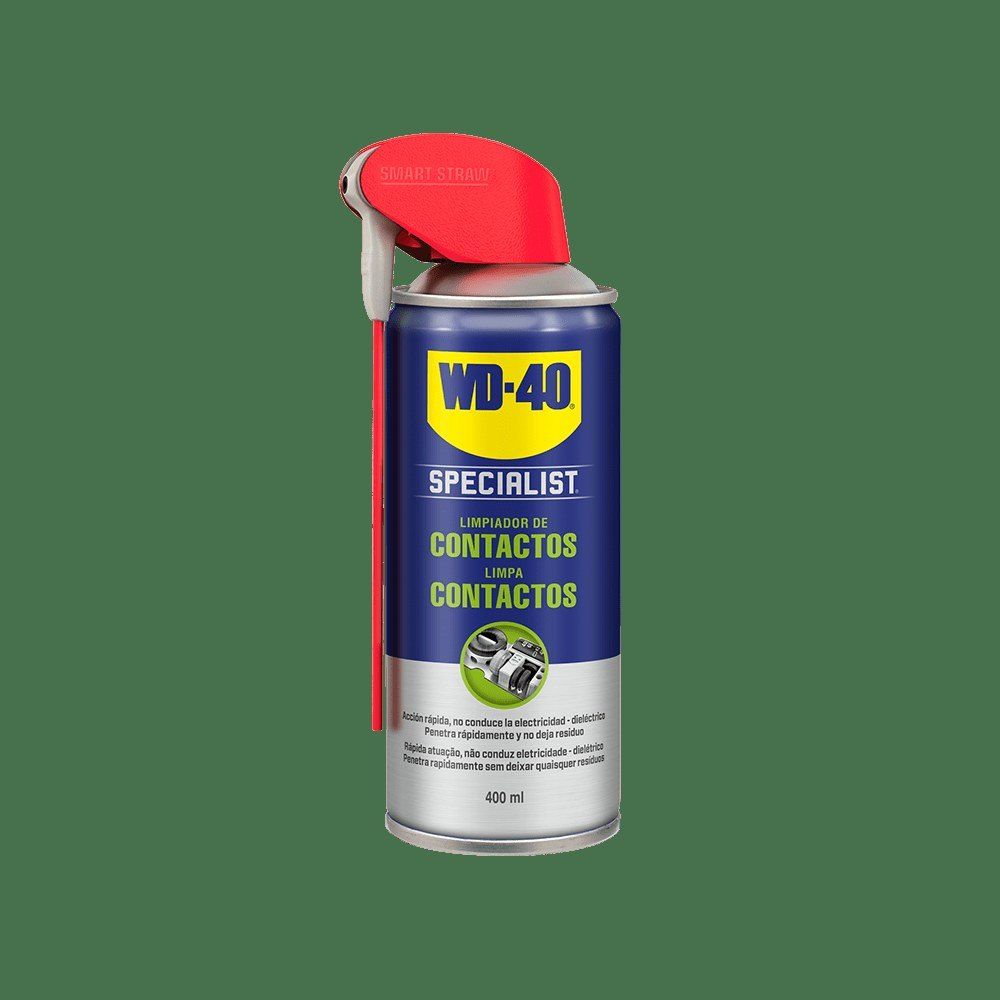
Spray WD-40 Specialist Contact Cleaner onto both halves of the connector, aiming into the sockets and onto the pins. It flushes out dust, oil and moisture and dissolves light oxidation.
Gently brush stubborn deposits with a soft brush and spray again. Do not use sandpaper or wire brushes, as they strip the protective plating from the contacts.
Step 4
Let it evaporate
Leave the connector for a few minutes until the product has completely evaporated. Check that no pins are bent and the rubber seal is intact, then push the connector together until the catch clicks.
Step 5
Clean and protect the battery terminals
Corroded terminals make starting harder, especially in frost. Remove them, brush the clamps and battery posts, treat them with WD-40 Specialist Contact Cleaner and let them dry.
Once the clamps are tightened, apply a thin layer of WD-40 Multi-Use on top: the film displaces moisture and slows down fresh corrosion.
Step 6
Check that everything works
Reconnect the negative terminal, switch on the ignition and test the lights, sensors and anything else that was causing trouble. If the fault remains, the cause may lie in the wiring or the component itself, and an auto electrician should take a look.
Tip: In autumn, before the cold sets in, go over the connectors for the headlights, tail lights and wheel-arch sensors. These suffer most from salty moisture in winter, and the job takes half an hour.
What next
Clean connectors whenever minor electrical glitches appear, and as a preventive measure once a year. To protect metal parts under the bonnet from moisture, keep WD-40 Multi-Use in the car.
These uses come from the experience of WD-40 users in many countries. Always follow the instructions and warnings on the product label.
More guides in «How to use».