Rubber seals on car doors, windows and balcony frames keep water and noise out, yet they are often forgotten during routine cleaning. Dust, pollen and moisture collect in the folds and a greenish film eventually appears: dirt that algae, mould and fungi have made their home.
The film is not just unsightly. It holds moisture, so the rubber ages, hardens and cracks faster, and in winter doors and sashes freeze shut. Removing it is easy, but it has to be done thoroughly, fold by fold, or it will soon come back.
What you will need
Important: Test the product on a hidden area of rubber first. Protect car upholstery, glass, painted frames and sills from overspray with a cloth. Use a melamine sponge gently, without heavy rubbing, as it works like a fine abrasive.
Step 1
Get ready
Pick a dry, mild day: the rubber needs to be dry and will have to be left open for a while after treatment. Put on gloves and have everything to hand. Open the car doors or window sashes fully so you can reach the whole perimeter.
Brush away dry dust and leaves first so you do not smear them around.
Step 2
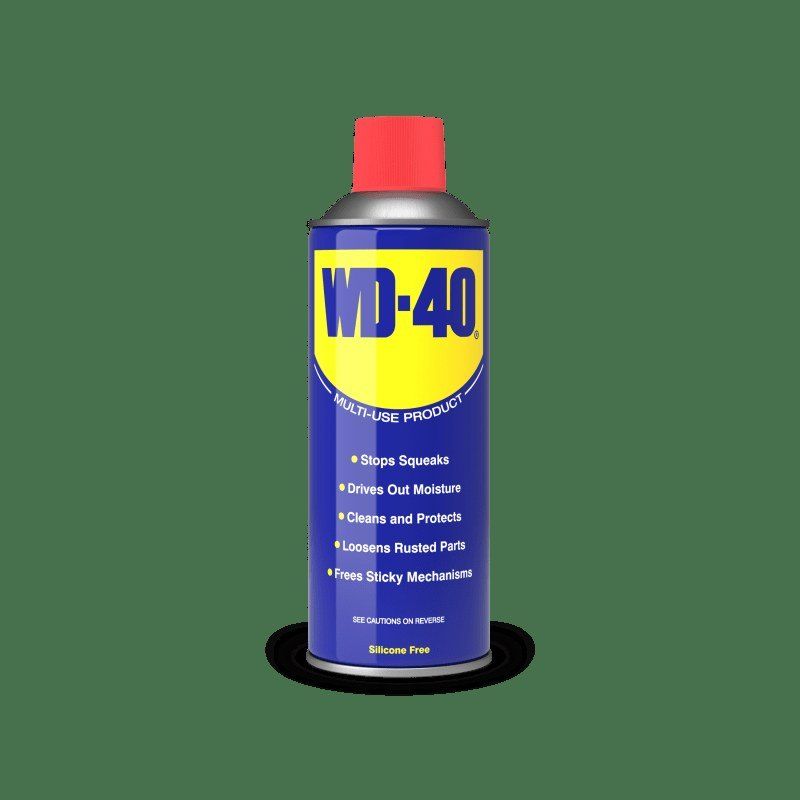
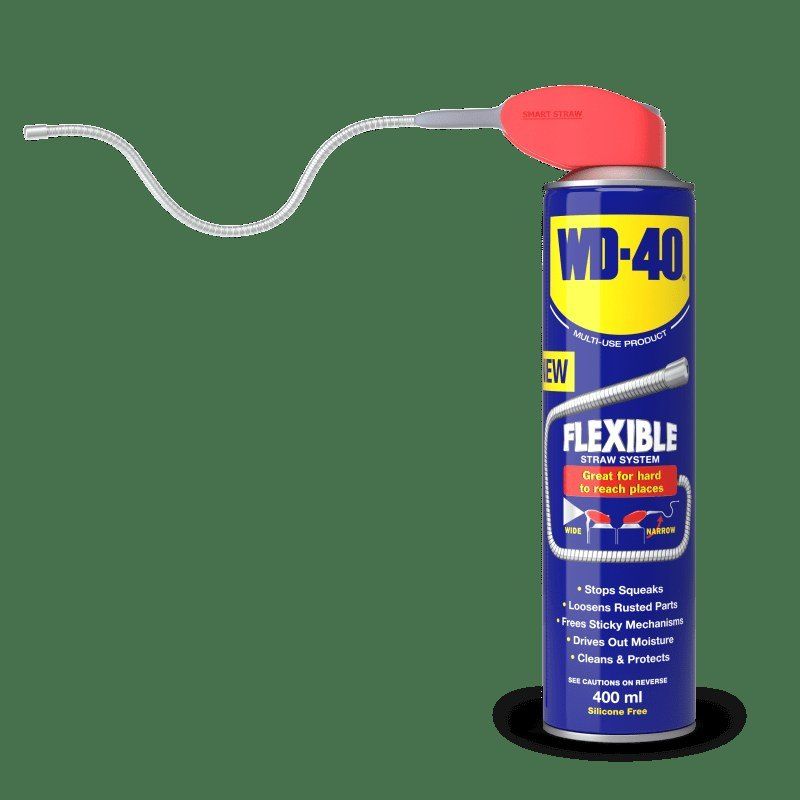
Apply WD-40 to the seals
Spray the stained areas generously with WD-40 Smart Straw: the straw gives a precise jet so the product gets into the folds rather than onto upholstery or glass. If you use a can without a straw, cover neighbouring surfaces with a cloth.
WD-40 Multi-Use dissolves the dirt and loosens its grip on the rubber, so the film comes away easily afterwards.
Step 3
Work it into every fold
Take the brush and work the product over the whole seal with circular strokes. Fold back the lips and creases of the rubber and get the product underneath: that is where the deposits cling longest.
Leave it for a few minutes to soak into the dirt.
Step 4
Wipe off the film and rinse
Wipe the seals with the sponge. For stubborn spots, moisten the sponge with a little WD-40 so it glides better and cleans deeper. Do not skip corners and gaps.
Then remove the remaining dirt and product with a microfibre cloth dipped in warm water with washing-up liquid and dry the rubber. If deposits remain in deep folds, repeat the cycle.
Step 5
Protect the rubber with silicone
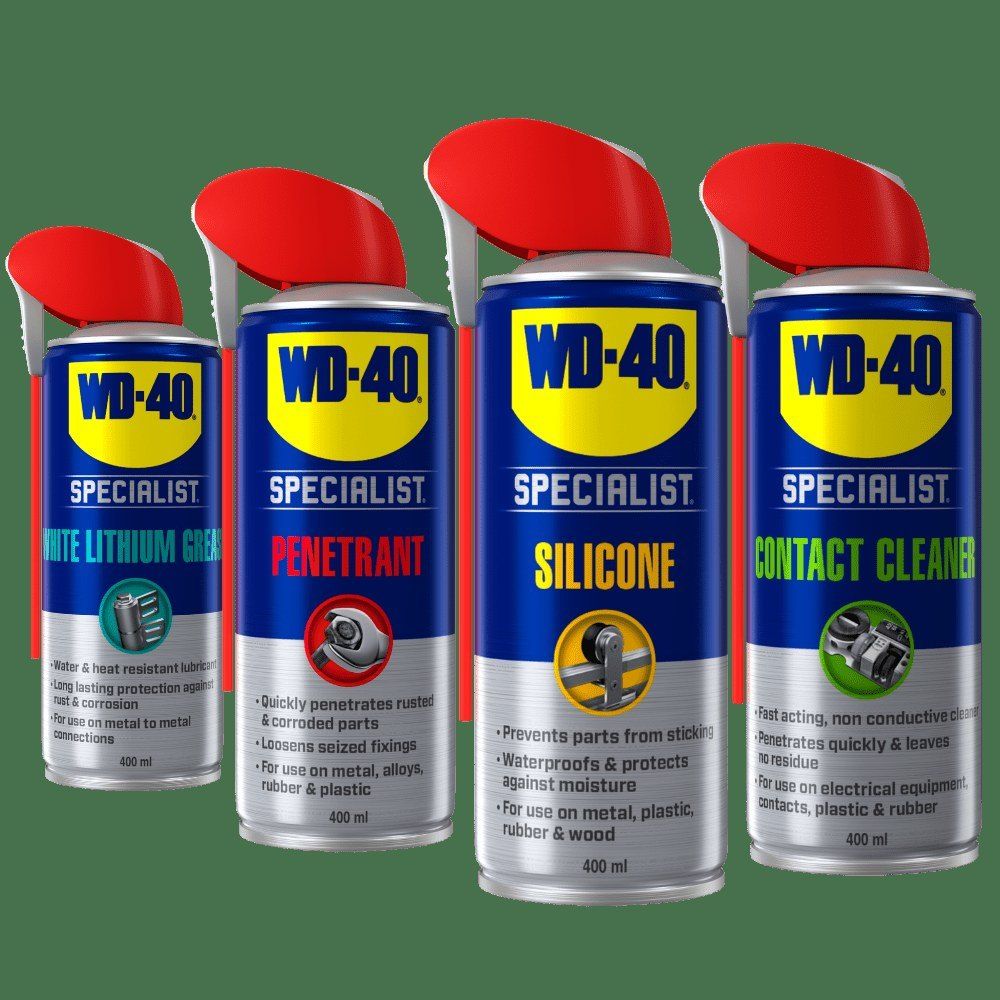
Clean, dry rubber needs protection. Apply WD-40 Specialist Silicone over the entire seal, including the inner folds, shielding nearby surfaces with a cloth.
Leave it for 10-15 minutes to soak into the material, then wipe off the excess. Silicone repels water, so there is less moisture in the folds for growth, and the rubber stays supple in the cold.
Tip: Green deposits appear where a seal stays damp for long periods: on cars parked under trees, on north-facing windows, near bathrooms. In those places wipe the rubber dry after rain or heavy condensation and the film will return far less often.
What next
Clean the seals twice a year, in spring and autumn, and renew the silicone protection before winter. The same WD-40 Specialist Silicone is ideal for boot, sunroof and fridge seals.
These uses come from the experience of WD-40 users in many countries. Always follow the instructions and warnings on the product label.
More guides in «How to use».