Price tags, barcodes and instruction labels end up on saucepans, frying pans, flasks and fridge or oven doors. Even when the paper peels off cleanly, a sticky layer of adhesive is left on the steel, attracting dust and feeling unpleasant to touch.
You can rub it off with cooking oil, alcohol or warm air from a hairdryer, but that takes time and often several attempts. WD-40 gets the job done much faster.
What you will need
- WD-40 Multi-Use or WD-40 Smart Straw for precise application
- a clean cotton rag or microfibre cloth
- a plastic scraper or an old bank card
- a hairdryer (if needed)
- warm water and washing-up liquid
Important: Never scrape stainless steel with a knife, blade or steel wool: the scratches will be permanent. Always wash cookware and anything that touches food with detergent after treatment. Do not spray onto a hot hob or oven; wait until they have cooled down.
Step 1
Remove what is left of the label
Carefully peel off everything you can: the paper layer, film and edges. If the label tears, warm it with a hairdryer for 20-30 seconds so the adhesive softens and the paper comes away in one piece.
The less paper remains, the faster the product reaches the glue itself.
Step 2
Apply WD-40 to the adhesive
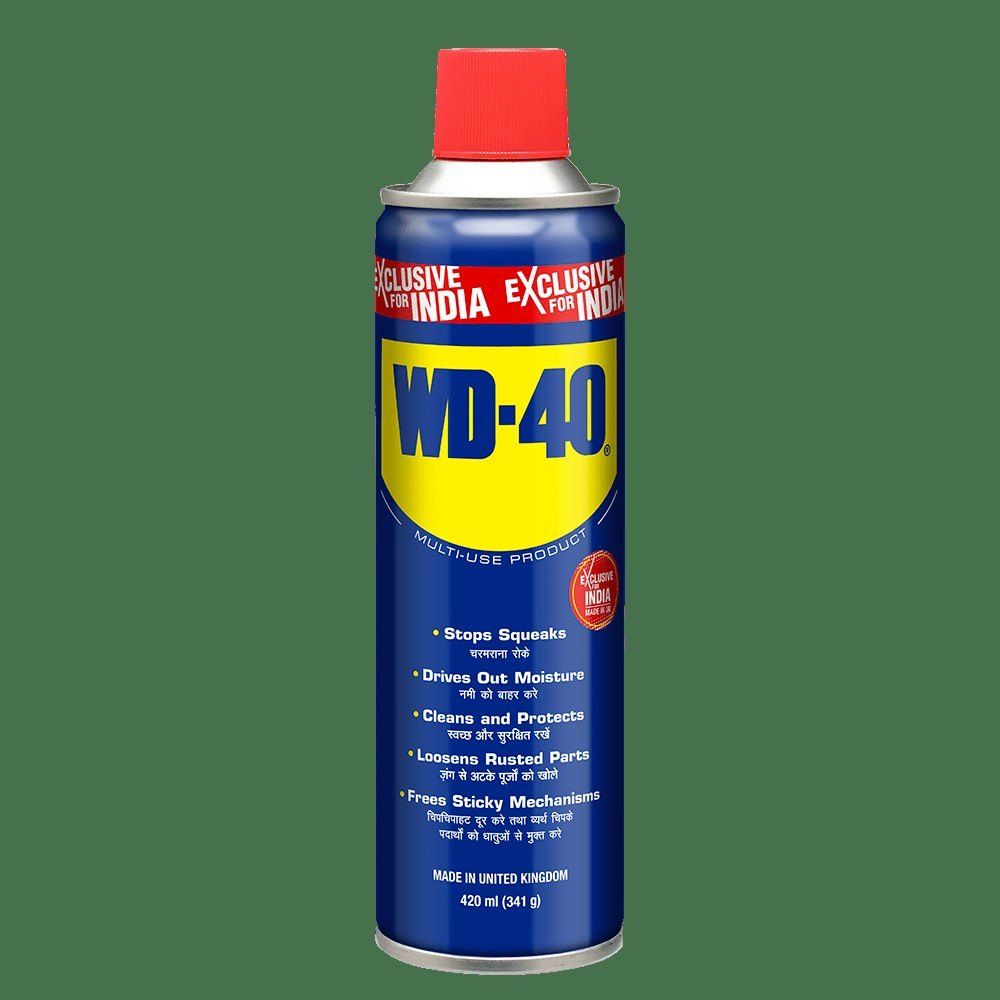
Shake the can and spray WD-40 Multi-Use onto the sticky area so the glue is fully covered. You do not need much: a thin layer is enough.
For small spots on handles, lids or tight areas, the WD-40 Smart Straw is more convenient: its fine jet hits the mark precisely without overspray.
Step 3
Let it work
Wait 2-3 minutes. During this time the product penetrates the adhesive and breaks its bond with the metal, so the glue softens and stops stretching.
For old, hardened residue you can apply a second coat and wait a few more minutes.
Step 4
Wipe or scrape it off
Wipe the area with a clean cloth, moving along the grain of the metal. In most cases the glue comes away straight away. Push off a thick layer with a plastic scraper or card first, then wipe away the rest.
If anything remains, repeat the application and wiping.
Step 5
Wash the surface
Wash cookware, flasks, glasses and containers in warm water with washing-up liquid to remove both the glue and any WD-40. For appliance doors, a wipe with a damp cloth and a drop of detergent, then a dry cloth, is enough.
The surface will be smooth and clean, with no stickiness or streaks.
Tip: The same method works for tape and sticker residue on glass, plastic and tools. On plastic, test the product on a hidden spot first.
What next
Keep a can of WD-40 in the kitchen or utility cupboard: it comes in handy not only for labels but also for shining stainless steel, silencing squeaky hinges and protecting metal from moisture.
These uses come from the experience of WD-40 users in many countries. Always follow the instructions and warnings on the product label.
More guides in «How to use».