Metal axles, pins and pivots in workshops, on building sites, in farm machinery or on production lines run under constant load and friction, often in damp, dust, frost or heat as well. A poorly lubricated axle wears faster, gets noisy and hot, and eventually seizes or breaks, which means downtime and costly repairs.
The right grease reduces friction, limits heat build-up in the metal, protects against corrosion and moisture, and extends component life. But it has to suit the working conditions. Below is how to match the product to the load and how to apply it so it actually does its job.
What you will need
Important: Only service a mechanism that is stopped, isolated, locked out and unloaded: rest booms or arms on supports. Do not apply grease thickly: the excess collects dust and abrasive grit that speeds up wear.
Step 1
Assess the operating conditions
Before choosing a product, answer three questions: what is the load (light, heavy, shock), what is the speed (slow powerful movement or fast friction), and what is the environment (moisture, splashes, dust, temperature swings).
If the axle has already seized, free it first: apply WD-40 Specialist Penetrant, give it a few minutes to work into the gap and carefully work the joint loose. Only then move on to choosing a grease.
Step 2
Heavy loads and slow movement
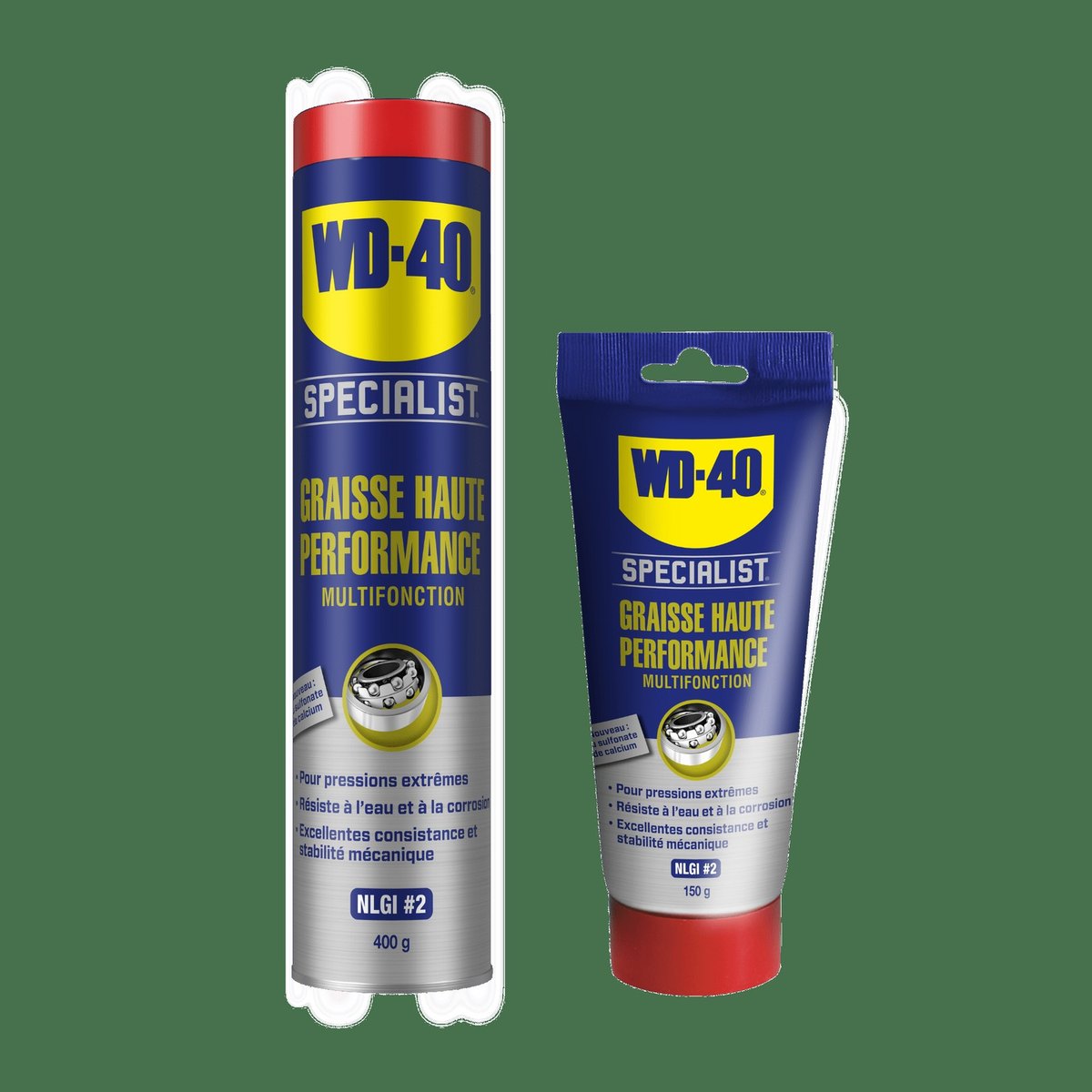
Pivot pins, pulleys, rollers and boom pins move slowly but under high pressure. They need a thick grease with strong adhesion that is not squeezed out of the gap and keeps its protective layer for a long time.
For servicing such joints, WD-40 Specialist White Lithium Grease is convenient: it is thick, does not run off vertical surfaces and protects against wear. For grease-nipple points on large machines, use the heavy-load grease recommended by the equipment manufacturer.
Step 3
Fast friction, moisture and splashes
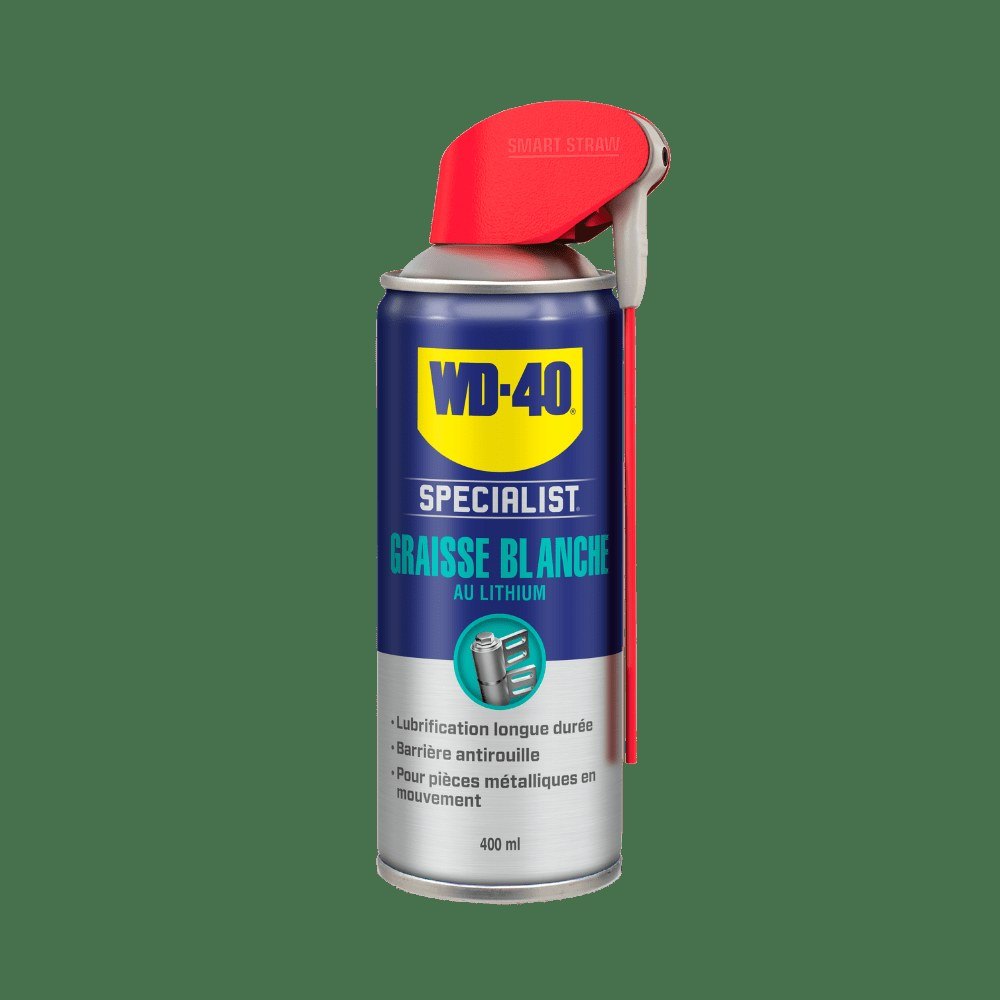
Machine-tool spindles, levers, slides and pins on frequently moving mechanisms need a grease that penetrates well and does not drip. WD-40 Specialist White Lithium Grease gets deep into the gap, clings firmly to metal and reduces noise and wear.
Its water-resistant formula suits equipment working in damp workshops or exposed to splashes. The two-position spray gives a wide pattern with the straw down and a precise jet with the straw up.
Step 4
Extreme outdoor conditions
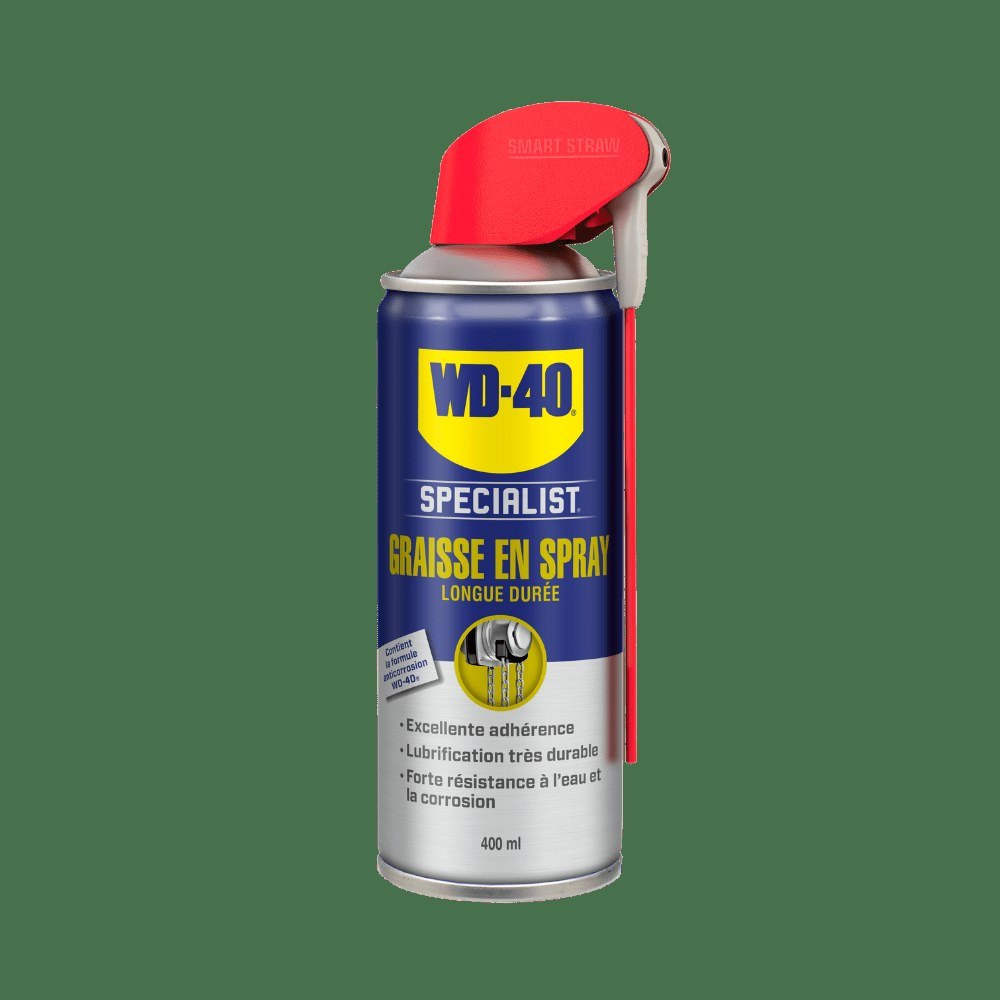
For axles working outside in rain, dust, frost and heat, or in long duty cycles, WD-40 Specialist Spray Grease (on request) is the right choice. It combines the core WD-40 formula with lubricating and anti-wear additives and withstands high pressure.
Its gel texture does not run even on vertical surfaces, and the aerosol allows clean, precise application. A winter of road salt and temperature swings is normal territory for this grease.
Step 5
Apply the grease correctly
Clean old grease, dirt and corrosion off the axle with WD-40 Specialist Degreaser and dry it thoroughly. Fresh grease on top of old dirt performs worse.
Apply a thin, even coat, then rotate or move the axle a few times to spread it over the whole friction area. Wipe off any excess pushed out. Little and often beats a lot every now and then.
Tip: Keep a simple lubrication log: date, component, product. After a few cycles you will see the real interval for each axle and can plan maintenance instead of emergency repairs.
What next
The interval depends on how hard the equipment works and how exposed it is: service outdoor and dusty joints more often, especially in autumn before the frosts and in spring after the salt season. For most loaded axles in the workshop, WD-40 Specialist White Lithium Grease will be the everyday choice.
These uses come from the experience of WD-40 users in many countries. Always follow the instructions and warnings on the product label.
More guides in «How to use».