A well-kept lawn starts with a well-kept mower. If you do not clean it straight after mowing, wet grass sticks to the blade and deck, dries into a hard crust, holds moisture and starts rust. A dirty blade cuts worse and tears the grass, and build-up under the deck disrupts airflow and clipping collection.
Cleaning takes a few minutes, while a full service with sharpening is worth doing several times a season. These steps suit both petrol and electric mowers.
What you will need
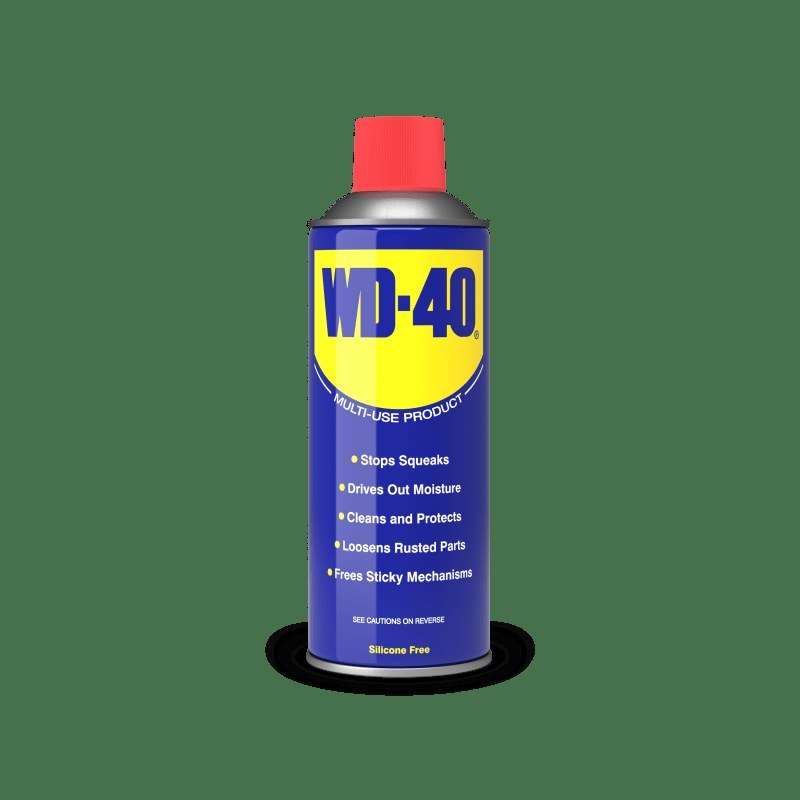
- WD-40 Multi-Use
- WD-40 Trigger Pro for treating the large deck area
- heavy gloves and safety glasses
- stiff bristle brush, wooden scraper, cloth
- garden hose or pressure washer
- spanner to remove the blade, file or sharpening stone
Important: Before cleaning, switch off the engine and wait for the blade to stop completely. On a petrol mower pull off the spark plug cap; on an electric one unplug it or remove the battery. Do not aim water at the engine, motor or connectors. The blade is sharp: always wear gloves.
Step 1
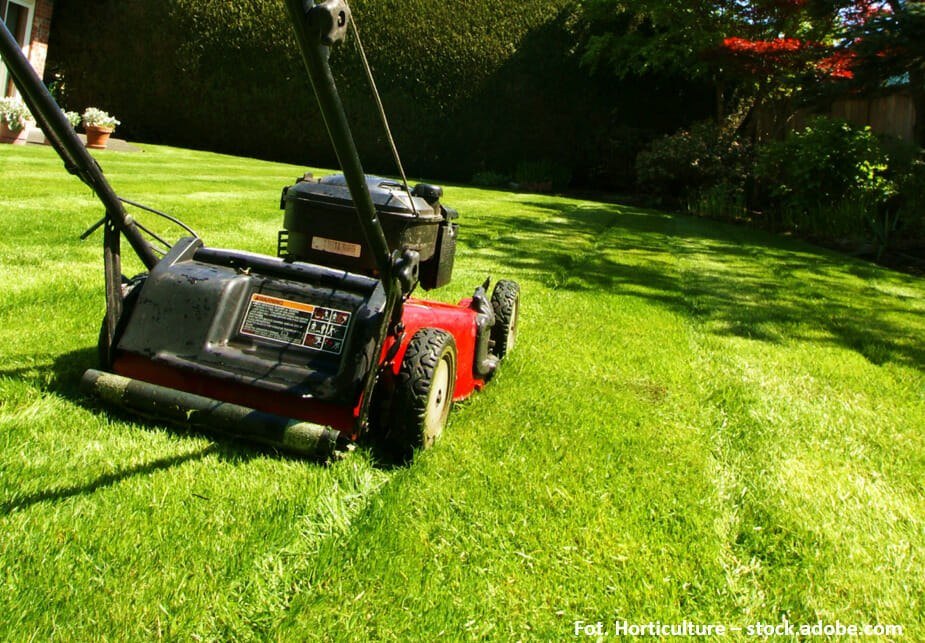
Make the mower safe
Disconnect the power as described above and empty the grass collector. Only tilt a petrol mower with the carburettor and air filter facing up, so fuel and oil do not end up where they should not. If you plan to lay it on its side, run the tank dry or drain the fuel first.
Step 2
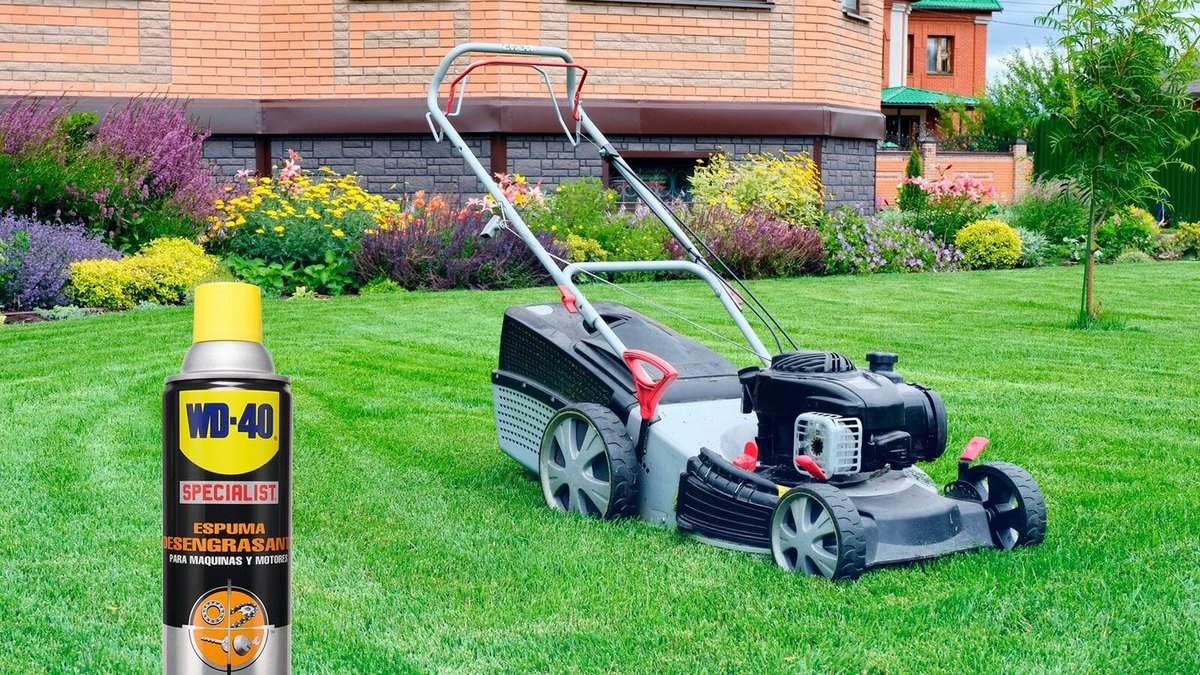
Rinse off the worst of the dirt
Hose down the deck and blade, or better still use a pressure washer, which shifts caked grass faster. Then use a stiff brush and a wooden scraper to remove whatever the water left behind.
Step 3
Deep clean the blade and deck
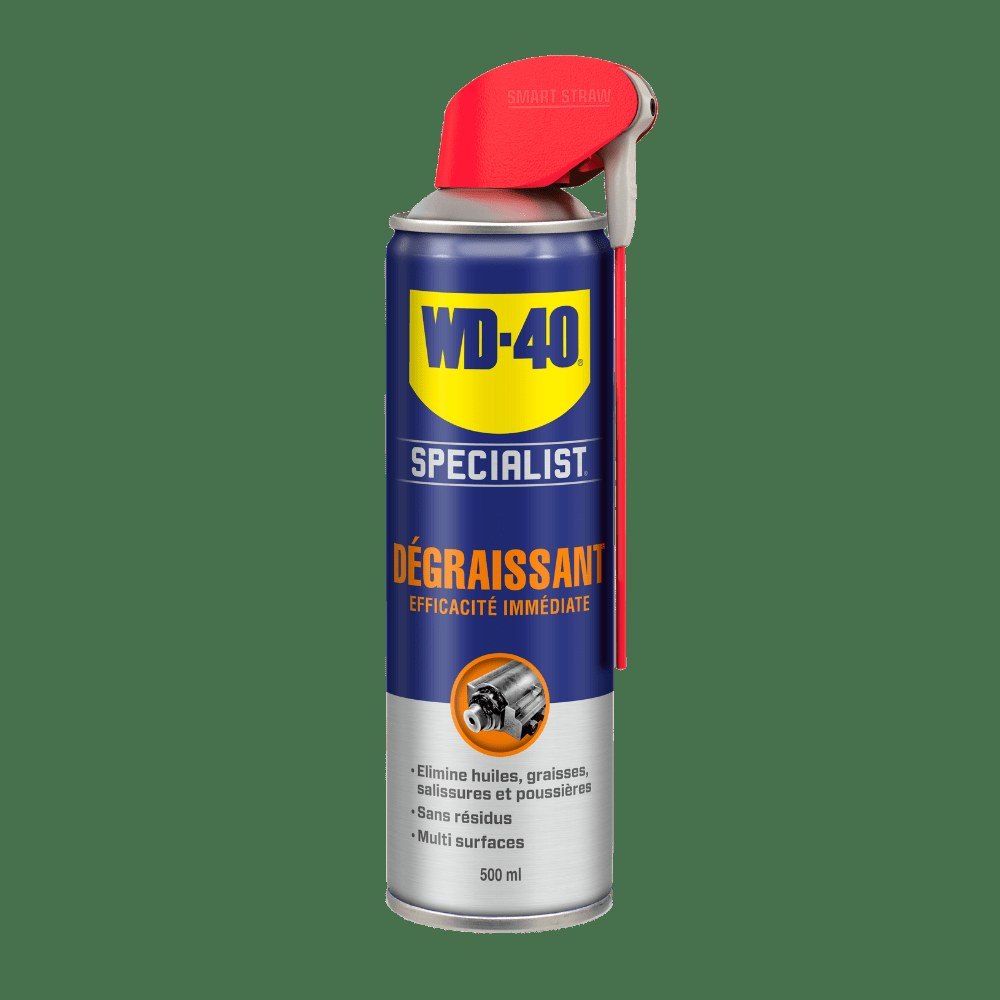
To remove greasy film and dried grass sap, spray WD-40 Multi-Use onto the blade and inside the deck, give it a few minutes to soften the deposits, then scrub with the brush and wipe with a cloth. For the large deck area, WD-40 Trigger Pro with its trigger spray is more convenient.
Step 4
Remove and sharpen the blade
For a full service, remove the blade by undoing the centre bolt with a spanner while holding the blade with a block of wood. Inspect it for rust, cracks and bends. A distorted blade must be replaced.
Sharpen a blunt edge with a file, bench grinder or angle grinder, following the cutting direction and keeping the original angle. Remove metal evenly from both ends so the blade stays balanced.
Step 5
Protect and refit the blade
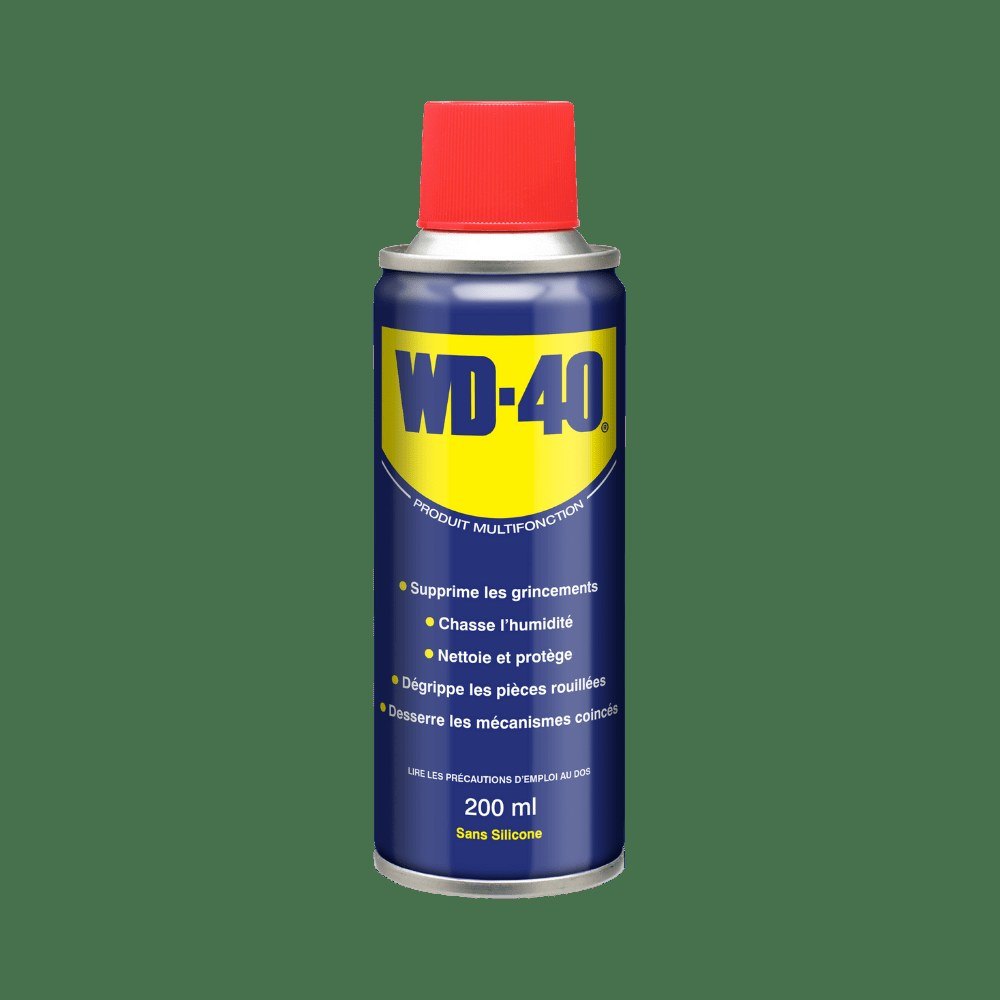
Spray the clean, sharp blade on both sides with WD-40 Multi-Use and wipe with a cloth: the thin film protects the metal from rust and moisture. Refit the blade in the same position, wings towards the deck, and tighten the centre bolt to the torque in the mower manual.
Step 6
Store it properly
Return the mower to its working position and refit the spark plug cap or reconnect the power. Store it somewhere dry and sheltered from rain. Before winter storage, treat the deck, blade and metal linkages again: in damp garages rust appears even when the mower is not used.
Tip: Height adjustment pivots, wheel axles and control cables also need attention: a short, precise burst of
WD-40 Smart Straw after washing drives out water and restores smooth movement.
What next
Give the mower a quick clean after every cut and sharpen and service it fully several times a season. A clean, sharp blade cuts evenly and keeps your mower going for years.
These uses come from the experience of WD-40 users in many countries. Always follow the instructions and warnings on the product label.
More guides in «How to use».