Over time a side window can start to squeak, creak or move up in jerks. It is most noticeable in winter, when the rubber seals harden in the frost and dust and sand collect in the runners. The noise is irritating and the regulator works under extra strain, so it wears faster.
In most cases there is no need for a garage. Find the cause and treat the right spots with silicone lubricant. Here is how.
What you will need
Important: Silicone leaves a rainbow smear on glass, so wipe off any excess straight away. Do not apply lubricants to the windscreen or wiper blades. Switch the ignition off before working on the mechanism inside the door.
Step 1
Find the source of the squeak
Lower and raise the window several times and listen. The squeak usually comes from one of three places: the side runners the glass slides in, seals that have hardened with age and cold, or the regulator mechanism inside the door.
If you hear it as the glass is almost closed, the rubber is to blame. If the glass moves in jerks and the motor strains, the runners or mechanism are more likely.
Step 2
Clean and lubricate the runners
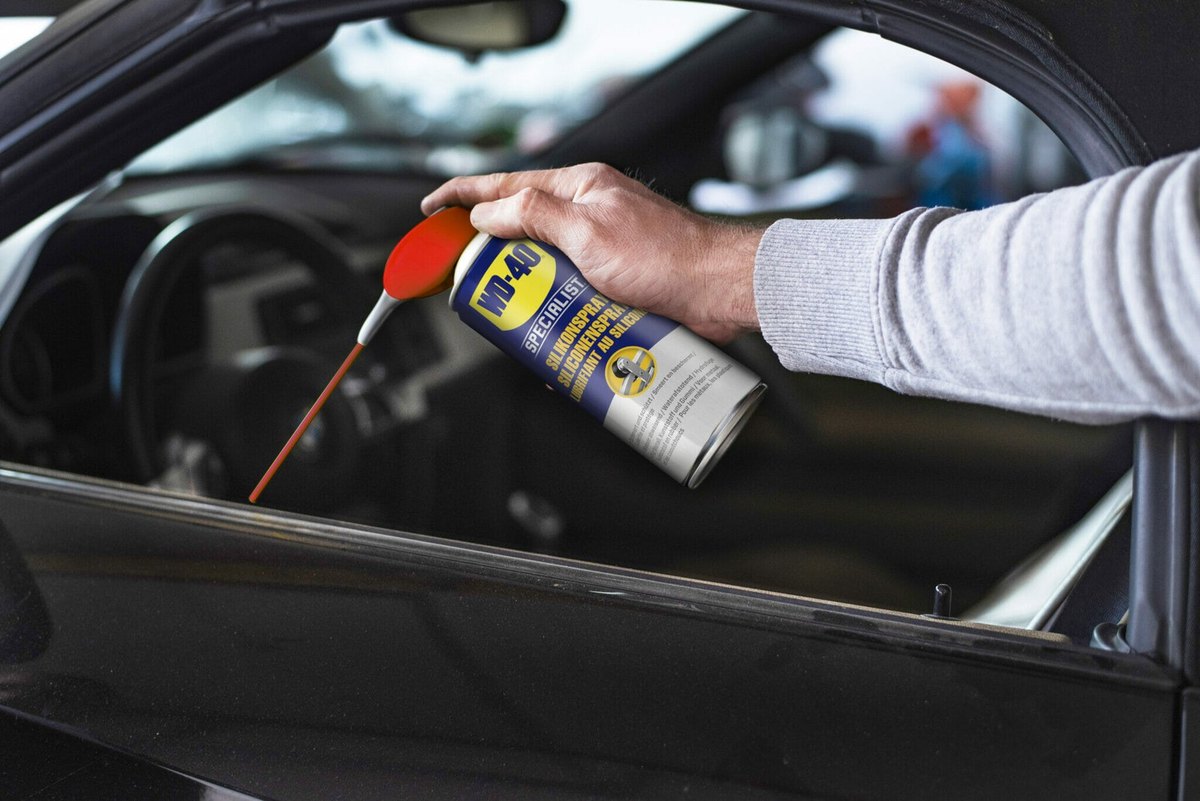
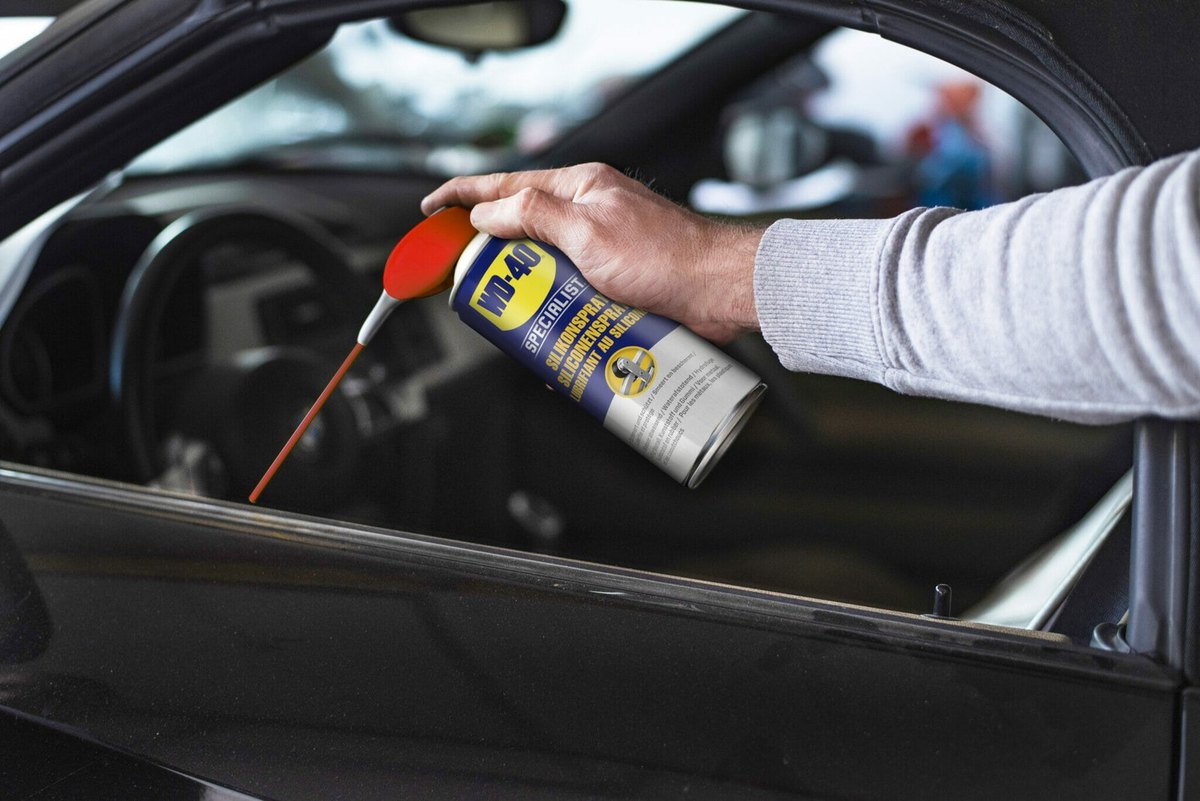
Lower the window fully. Wipe the accessible parts of the runners with a cloth to remove dust and sand. Shake the can of WD-40 Specialist Silicone and use the straw to apply it along the full height of the side runners on both sides.
Raise and lower the window a few times to spread the lubricant, then wipe off anything that has reached the glass.
Step 3
Refresh the seals
Treat the rubber seals around the window opening: spray them directly or put the lubricant on a cloth and wipe them. Silicone restores the rubber's flexibility, reduces friction and helps stop cracking and the glass freezing to the seal in winter.
Run the window up and down a few more times and wipe any marks off the glass.
Step 4
Check the window regulator
If the squeak remains after treating the runners and rubber, the problem is inside the door. The door panel has to come off, so if you have not done it before, leave this to a mechanic.
With the mechanism exposed, clean old dirt off the cable, pulleys or rack and apply WD-40 Specialist White Lithium Grease to the moving parts. It lasts well and does not run. Keep it away from electrical connectors.
Step 5
Do a final check
Refit anything you removed and test the window in both normal and one-touch modes. It should move evenly, without jerks or noises. Finish by cleaning the glass with window cleaner so no smears remain.
Tip: Do this in autumn, before the first frosts. Seals treated with silicone stop the glass freezing in place, so on a cold morning the regulator will not tear the rubber or snap the cable trying to lower the window.
What next
As prevention, treat the runners and seals with WD-40 Specialist Silicone twice a year. The same can is handy for door and boot seals so they do not stick in winter.
These uses come from the experience of WD-40 users in many countries. Always follow the instructions and warnings on the product label.
More guides in «How to use».