A satellite dish can work for years without any attention, but after strong wind, heavy rain or snow the signal may weaken or disappear completely. The cause is usually simple: the wind has knocked the dish out of alignment, or moisture has got into the connectors.
Most of these problems can be fixed yourself in about an hour. If the fault is electronic (a failed LNB or receiver), call a technician. Remember that dishes are usually mounted on roofs or balconies, so safety comes first.
What you will need
Important: Only work at height on a dry, calm day, with a secure harness and a stable ladder. Unplug the receiver from the mains before working on the connectors.
Step 1
Free the mounting nuts
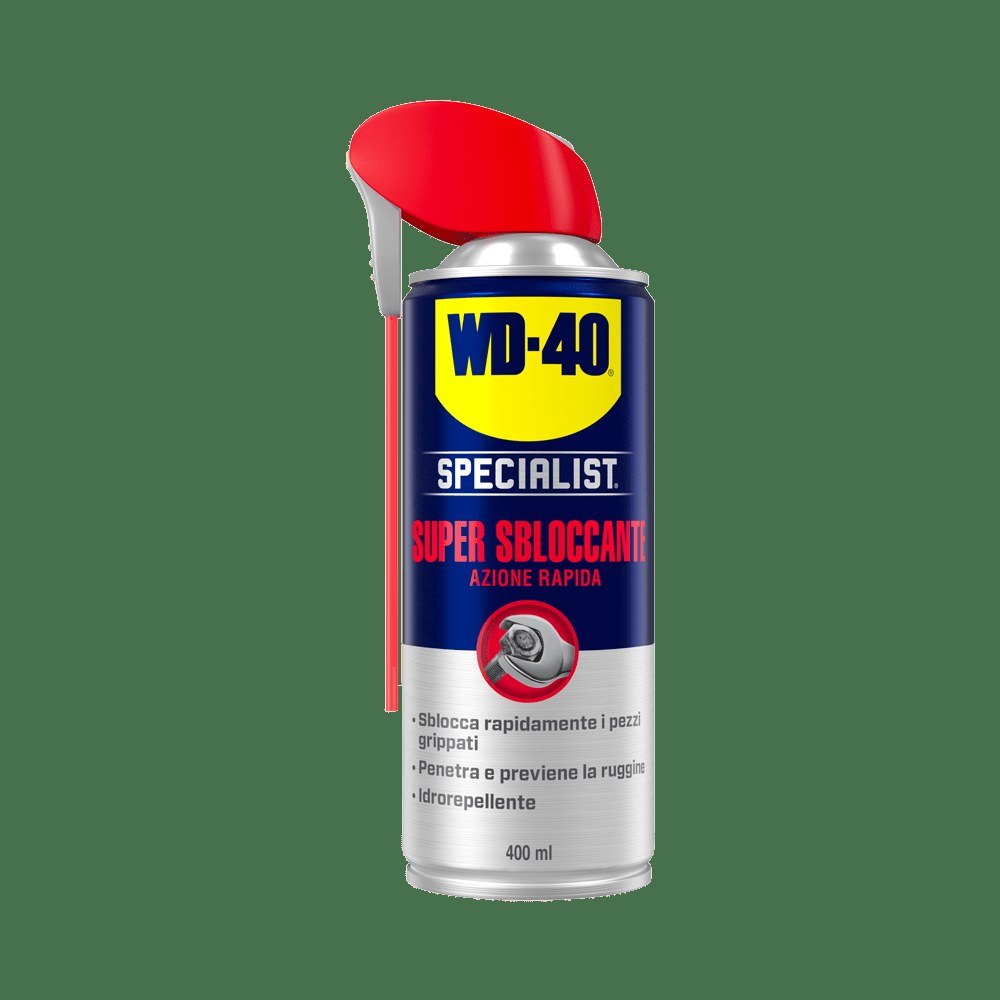
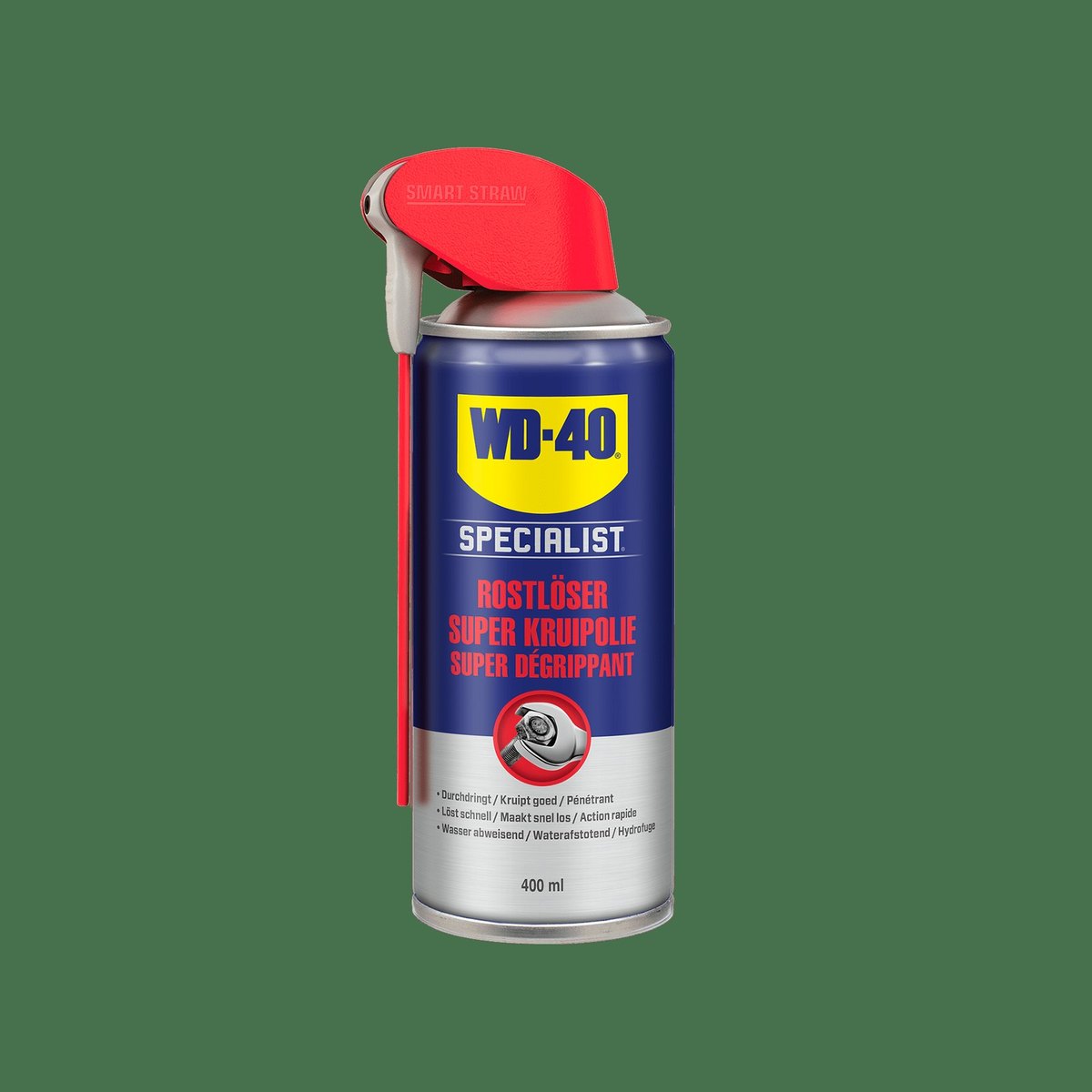
To re-aim the dish you need to loosen the bracket nuts that hold it on the mast and the nuts that set the elevation angle. After a few winters of rain, snow and temperature swings, the threads often seize.
Apply WD-40 Specialist Penetrant to the threads and wait a few minutes for it to work into the joint. Then turn the spanner smoothly, without jerking, so you do not round off the nut.
Step 2
Re-aim the dish
Slowly move the dish horizontally, then vertically, until your helper by the TV tells you the signal is back. Many receivers display signal strength and quality, so aim for the highest readings.
The correct azimuth and elevation for your town are easy to find with online satellite dish calculators. Move the dish by millimetres at a time, as even a small shift has a noticeable effect on reception.
Step 3
Tighten and protect the mounting
Once the signal is stable, tighten all the nuts firmly. Then spray the bolts and brackets with WD-40 Multi-Use: it displaces moisture and protects the metal from corrosion, so the nuts will come undone easily next time.
Step 4
Service the LNB connector
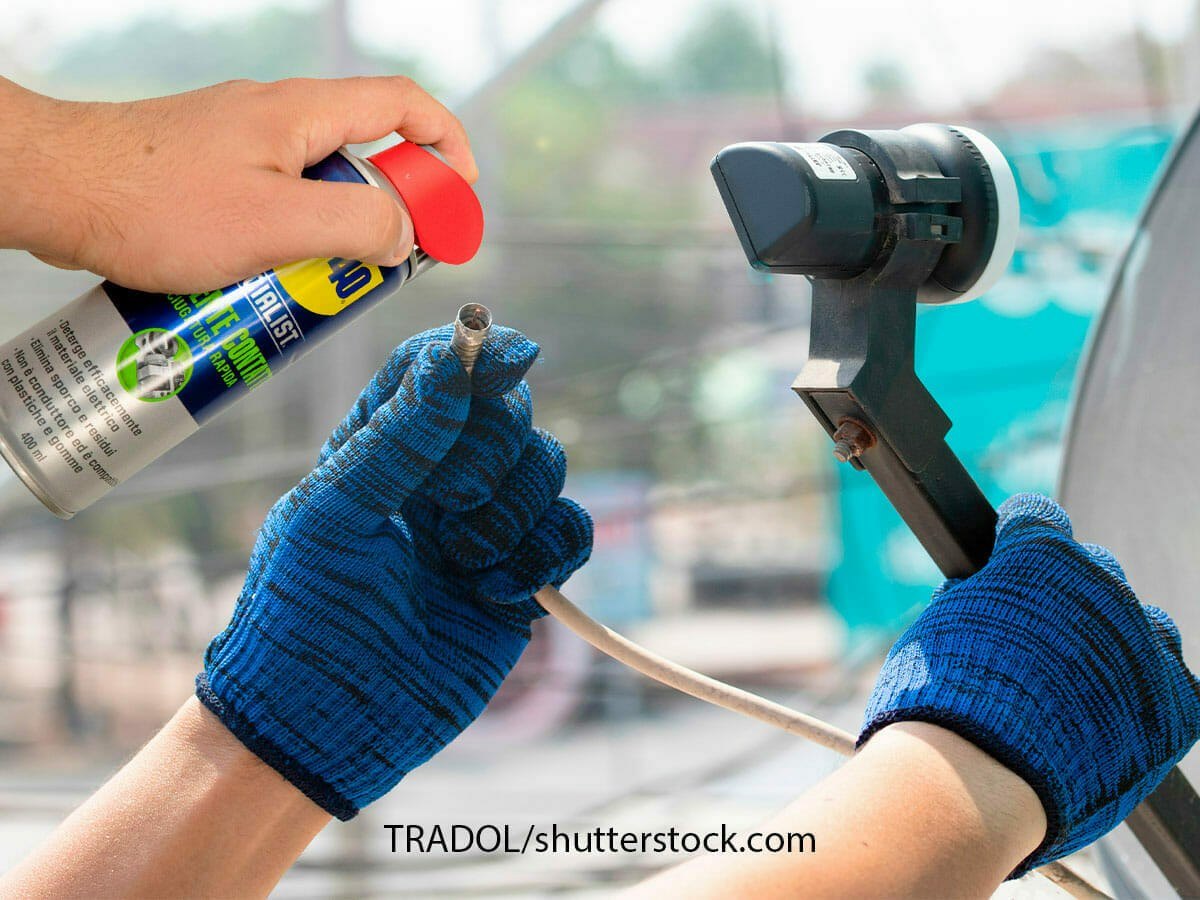
Even if the signal is already good, it is worth checking the cable connector on the LNB. Unscrew it carefully, and if the nut is tight, a little penetrant will help.
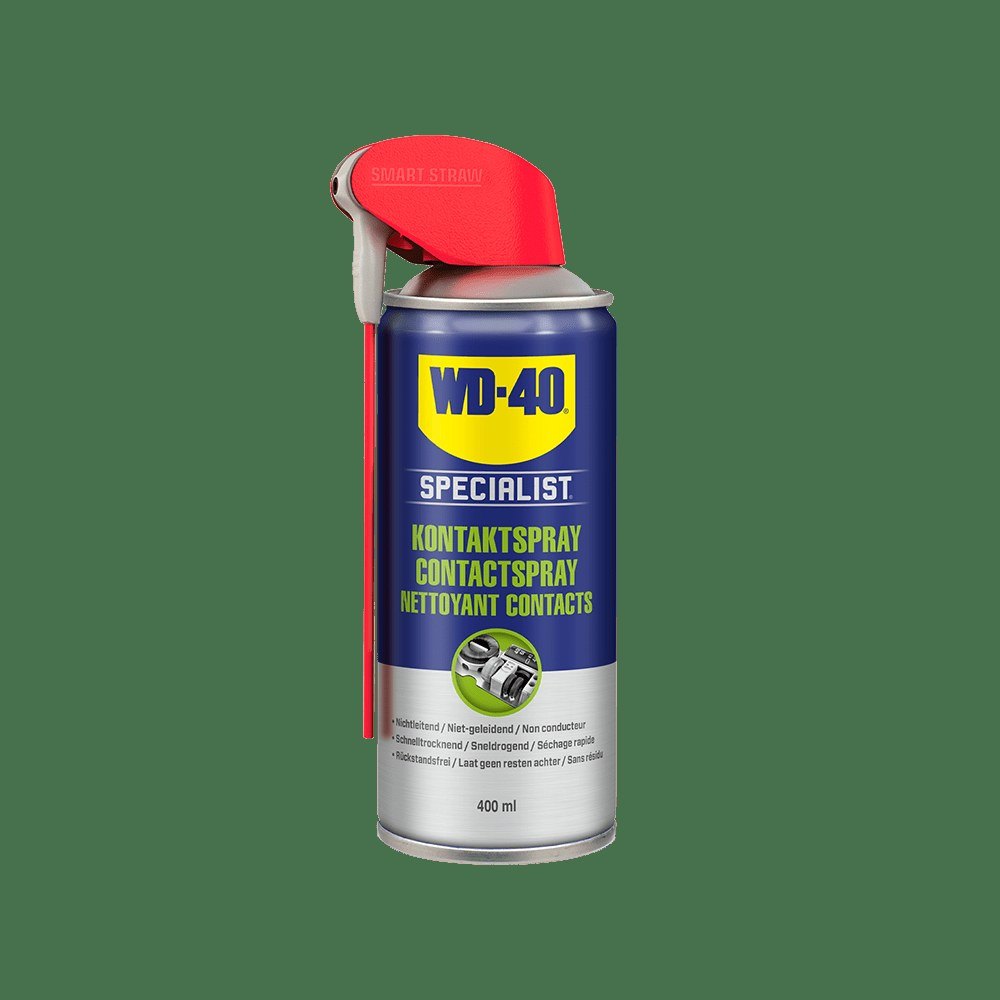
Treat the connector with WD-40 Specialist Contact Cleaner. It dissolves dirt and moisture, evaporates quickly, leaves no residue and is safe on metals, plastics and rubber. Once dry, screw the connector back on.
Step 5
Check and replace connectors if needed
Rainwater and melting snow can seep into F-connectors. Unscrew them and inspect: if the metal is dark, greenish or coated with oxide, replace them with new connectors of the same size.
Strip the cable end carefully so the centre conductor does not touch the braid. Before connecting, treat the connectors and sockets with contact cleaner. Do the same at the wall socket where the cable runs to the TV.
Tip: After replacing outdoor connectors, wrap the joint with self-amalgamating tape or fit a protective boot. This keeps moisture out even during long autumn rains.
What next
Inspect the dish every spring and after every strong wind or snowfall: check that it has not shifted, that the mounting is rust-free and the connectors are dry. For small jobs at height, a WD-40 100 ml can fits neatly in your pocket.
These uses come from the experience of WD-40 users in many countries. Always follow the instructions and warnings on the product label.
More guides in «How to use».