White marks on shower glass, taps and sinks are limescale: calcium deposits left behind by tap water. Hard water is common in many regions, so the residue can come back within days of cleaning, especially where drops are left to dry on their own.
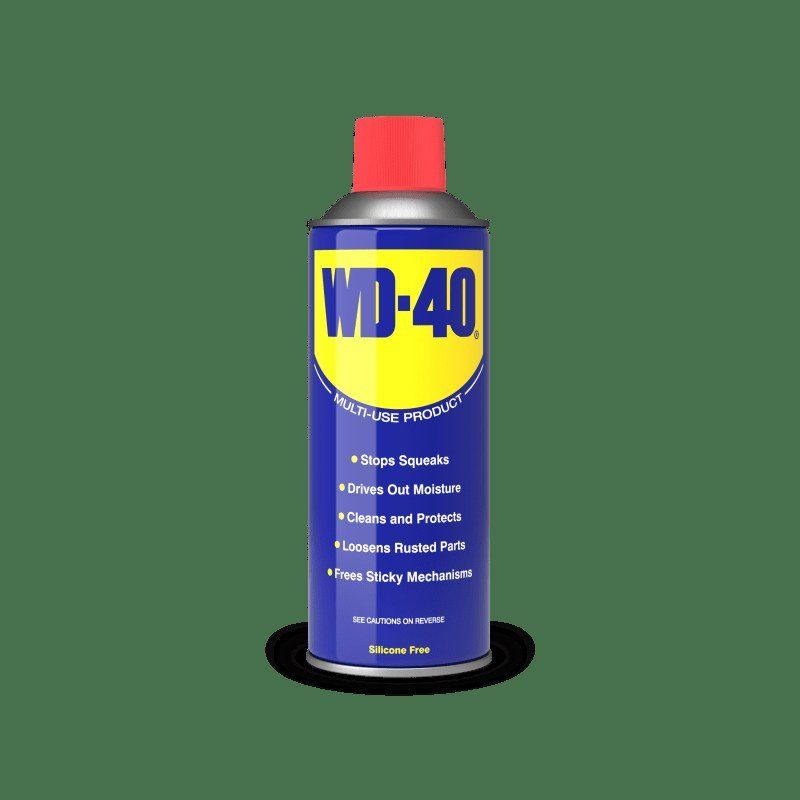
You can deal with it using simple household products: vinegar dissolves fresh deposits, baking soda tackles older layers, and a thin film of WD-40 Multi-Use on metal fittings after cleaning repels water and slows down new stains.
What you will need
- White distilled vinegar
- Baking soda
- Water and a spray bottle
- Soft microfibre cloths
- An old toothbrush or soft brush
- WD-40 Multi-Use or WD-40 Smart Straw with a thin straw for tight spots
- Water softener or filter (optional)
Important: Vinegar is not suitable for natural stone (marble, travertine) or lime-based grout: the acid etches it. Do not apply WD-40 to shower trays, floors or bathtubs, as the surface will become slippery. Always test on a hidden area of an unfamiliar finish first.
Step 1
Dissolve fresh limescale with vinegar
Mix vinegar and water in equal parts and pour into a spray bottle. Spray onto the shower screen, tap or sink, leave for 5-10 minutes and wipe with a cloth. No spray bottle? Soak a cloth in the solution and hold it against the stain for a few minutes.
Tap aerators and shower heads are best unscrewed and soaked in the same solution for an hour, then rinsed with clean water.
Step 2
Tackle old layers with baking soda
For thick deposits, mix baking soda with a little water into a paste. Apply it to the stain, leave for 10-15 minutes and work it with a soft brush. Baking soda acts as a gentle abrasive and will not scratch glass or chrome as long as you do not scrub with dry paste.
An old toothbrush is handy around the base of the tap and in the corners of the cubicle.
Step 3
Rinse thoroughly and dry
Rinse off all vinegar and soda with clean water so that no acid remains on metal or rubber seals. Dry every surface with microfibre: drops left to dry on their own are exactly what creates new white rings.
Step 4
Protect metal with WD-40
Spray a little WD-40 Multi-Use onto a clean cloth and wipe chrome taps, handles and metal shower frames. The thin film displaces moisture, restores shine and helps water bead off, so limescale builds up more slowly.
For gaps around taps and the hinges of shower doors, aim the spray through the straw of WD-40 Smart Straw. Wipe off any excess straight away with a dry cloth.
Step 5
Prevent new stains
Use a rubber squeegee on the glass after every shower and repeat a light vinegar clean once a week. If limescale returns very quickly, consider a filter or water softener: it also protects your boiler, washing machine and kettle.
Tip: Never mix vinegar with chlorine-based cleaners, as this releases harmful fumes. Wear rubber gloves and keep the bathroom ventilated.
What next
A light weekly clean and a monthly wipe of metal fittings with WD-40 Multi-Use will keep your bathroom free of white marks. The same method works for the kitchen sink and tap.
These uses come from the experience of WD-40 users in many countries. Always follow the instructions and warnings on the product label.
More guides in «How to use».