A stopcock that has not been used for ages, an outdoor tap after winter or a mixer in a hard-water area often refuses to turn. The cause is rust, limescale and dirt packed into the mechanism, or sometimes a washer stuck to its seat.
Forcing it with a spanner is a bad idea: you can snap the handle or shear the spindle. It is much safer to soften the deposits and corrosion first, and, if the tap also drips, to take out the headgear and replace the washer.
What you will need
Important: Turn off the water at the mains before dismantling. After treating any tap used for drinking water, open it and run the water for 2-3 minutes to flush away any residue.
Step 1
Clean the outside of the tap
Dirt, rust and limescale around the handle and spindle are often what stops it turning. Clean these areas with a brass brush and a rag, then try the tap. If it turns, the problem is solved.
Step 2
Lubricate the mechanism
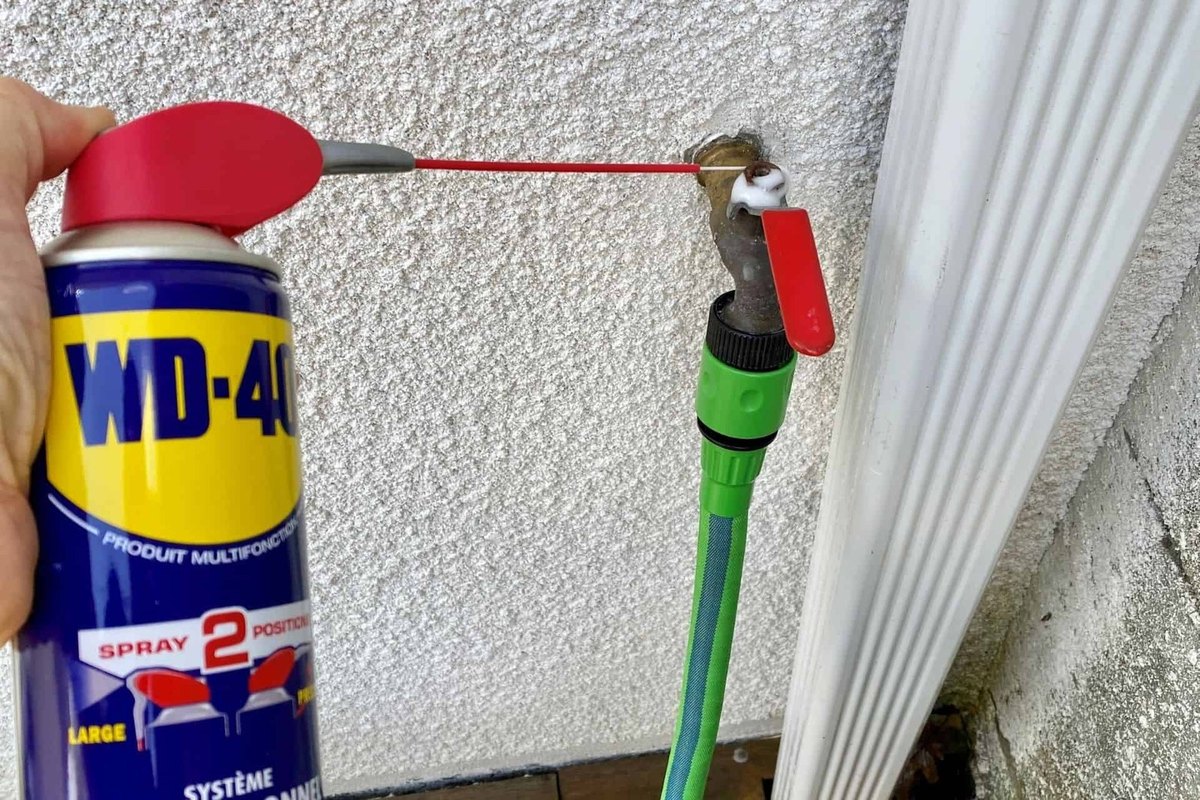
If the tap is still stiff, apply WD-40 Smart Straw through the thin straw into the gap between the handle and the body, onto the spindle and the gland nut. Do not overdo it; a few short bursts are enough.
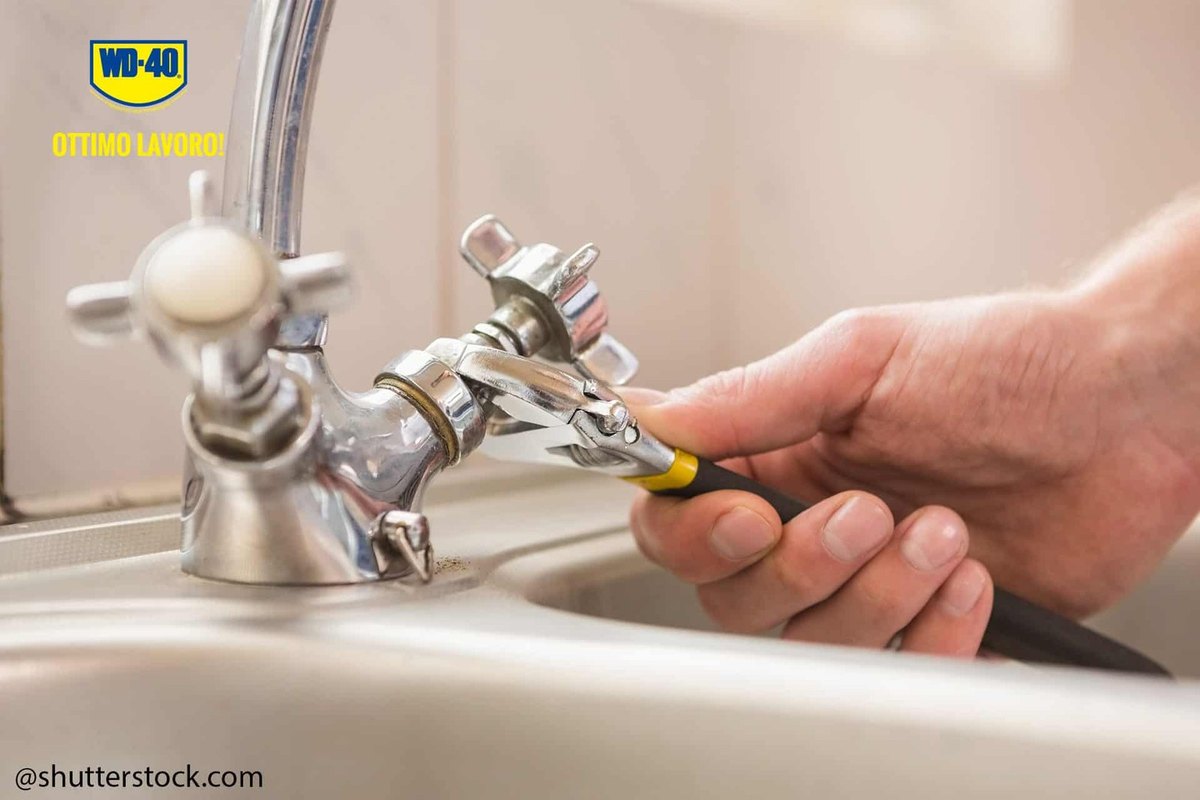
Wait a few minutes for the product to penetrate, then turn the handle smoothly anticlockwise, without jerking. Open and close the tap several times and wipe off the excess.
Step 3
Free a rust-seized tap
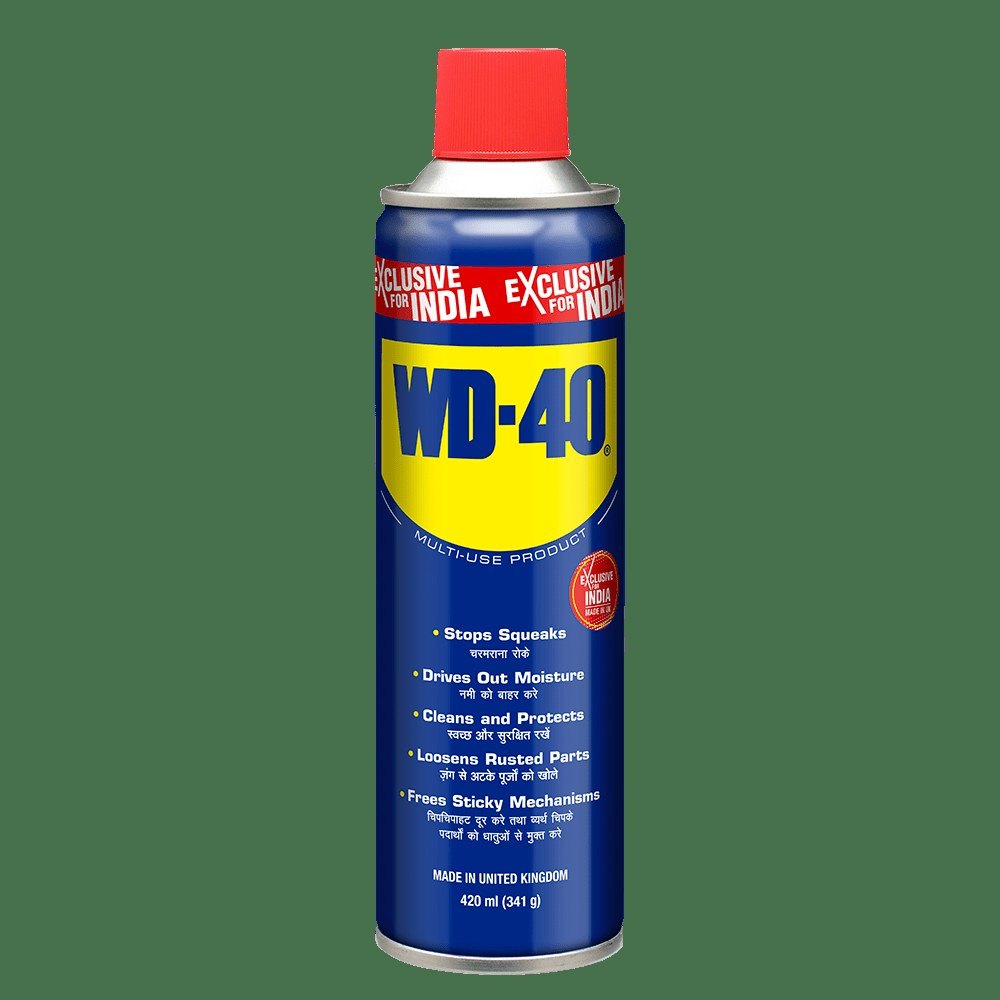
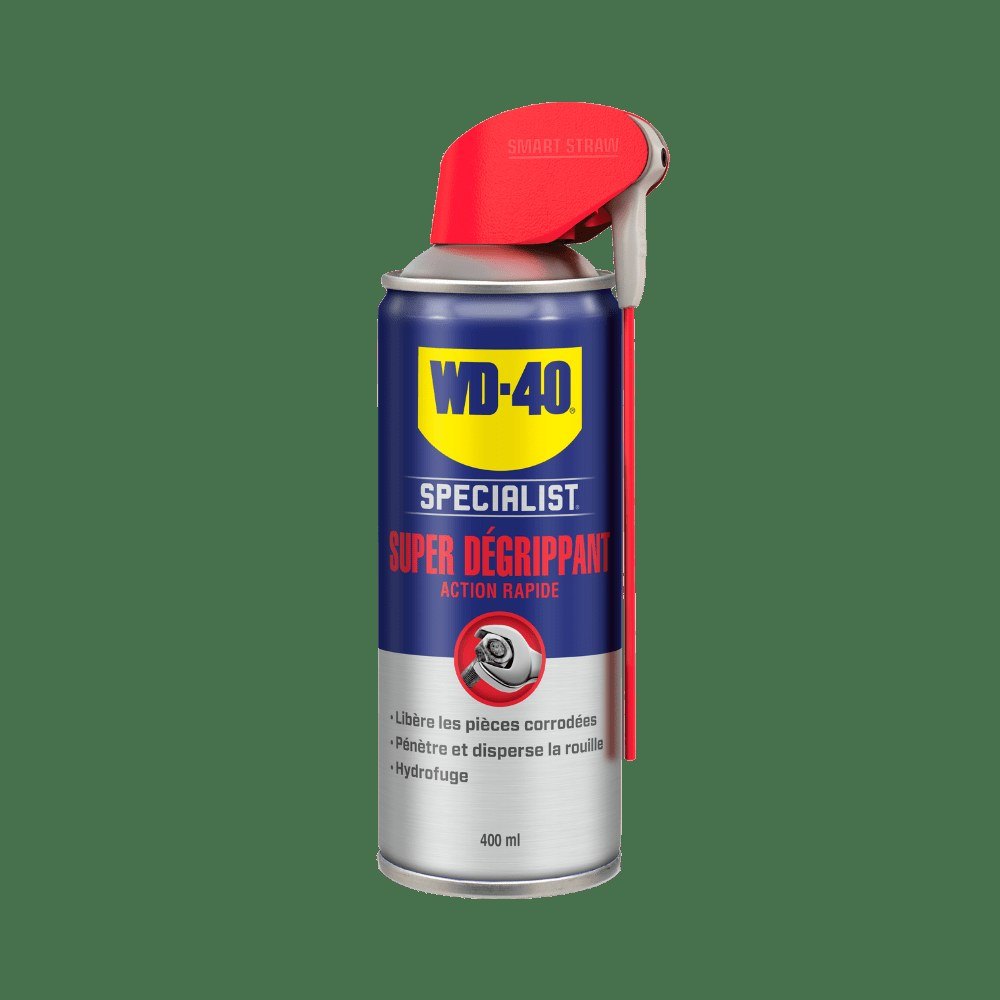
Outdoor taps and old stopcocks are often so rusted that multi-use spray is not enough. WD-40 Specialist Penetrant is made for this: spray it onto the spindle and nuts, leave it for a few minutes and only then try to open the tap. Repeat if needed.
Step 4
Descale the spout
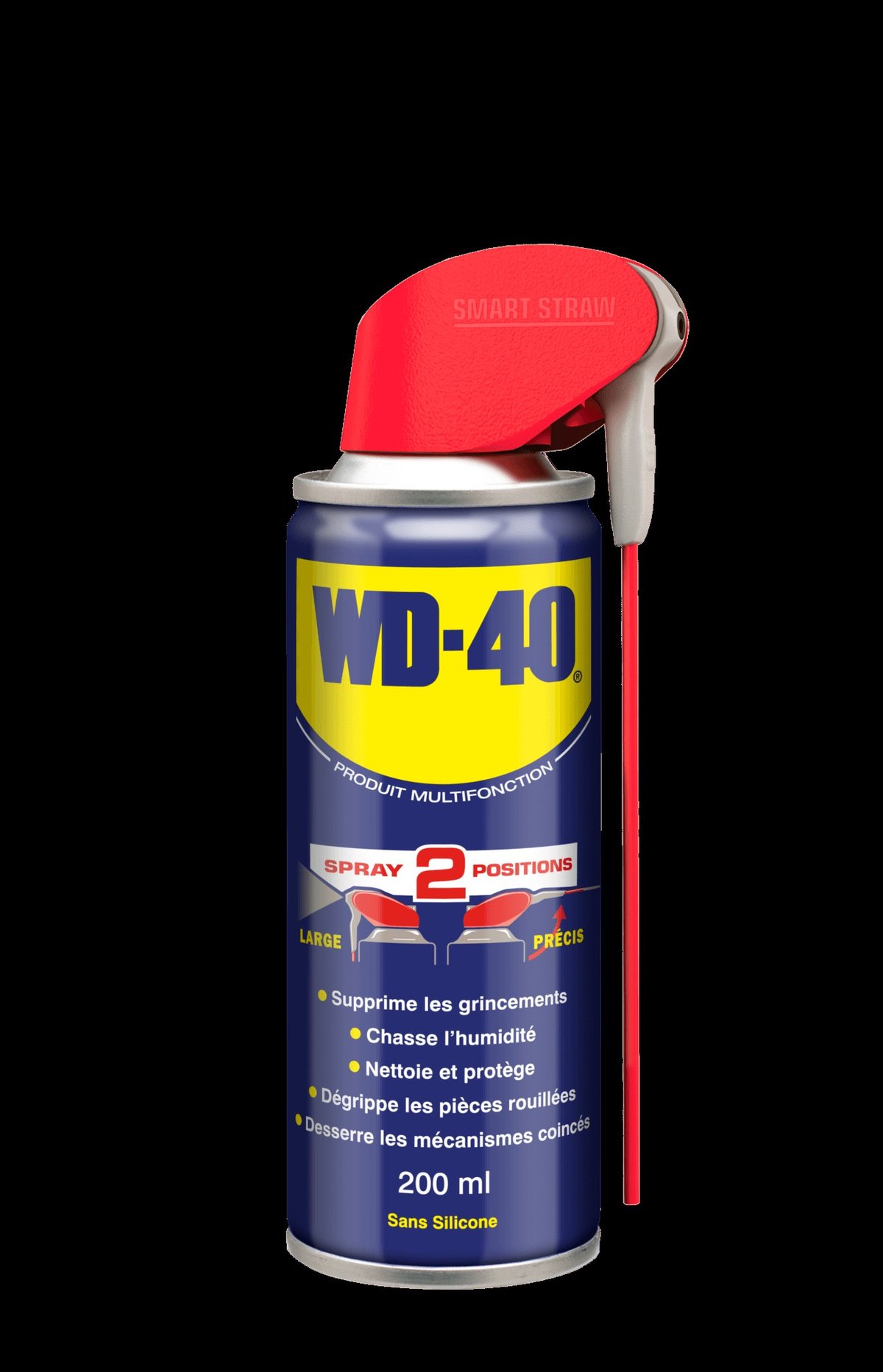
Limescale also builds up at the end of the spout, making the flow weak or spluttering. Unscrew the aerator, treating the thread with WD-40 Multi-Use if it will not budge, and clean the screen with a brush. Heavy scale softens in white vinegar within an hour.
Refit the aerator and run the water for a few minutes.
Step 5
Remove the headgear and replace the washer
If the handle turns but the tap drips, the washer is worn or limescale has built up on the seat. Turn off the water, remove the handle and unscrew the headgear with a spanner, wrapping the body in a cloth.
Replace a hardened or misshapen washer with an identical one. Clean the spindle with a brass brush moistened with multi-use spray; do not use sharp tools inside the body. Coat the new washer and rubber O-rings with WD-40 Specialist Silicone, screw the headgear back in and turn the water on.
Step 6
Bring back the shine
Finally, put a little multi-use spray on a rag and wipe the tap: it removes fingerprints and pale limescale marks. Then wash the tap with water and washing-up liquid.
Tip: If the tap still drips with a new washer, limescale has made the seat uneven. It can be levelled with a hand tap reseating tool, but replacing the whole headgear is simpler and more reliable.
What next
Before the frosts, turn off outdoor taps, drain them and treat the spindle with lubricant, so they open easily in spring. Turn stopcocks on your pipes a few times a year to stop them seizing.
These uses come from the experience of WD-40 users in many countries. Always follow the instructions and warnings on the product label.
More guides in «How to use».