When you top up a petrol mower halfway through cutting, grass, soil and dust from the body and filler cap easily get into the tank. Any contamination in the fuel causes trouble: clumps block the petrol flow, fine dirt clogs the carburettor, and grit that reaches the cylinder can score its walls.
The fuel filter on the line between tank and carburettor traps this dirt. If your mower starts stalling, losing power or starting badly, checking the filter is the first and cheapest step.
What you will need
- new fuel filter of the same shape and size
- long-nose pliers for the spring clips
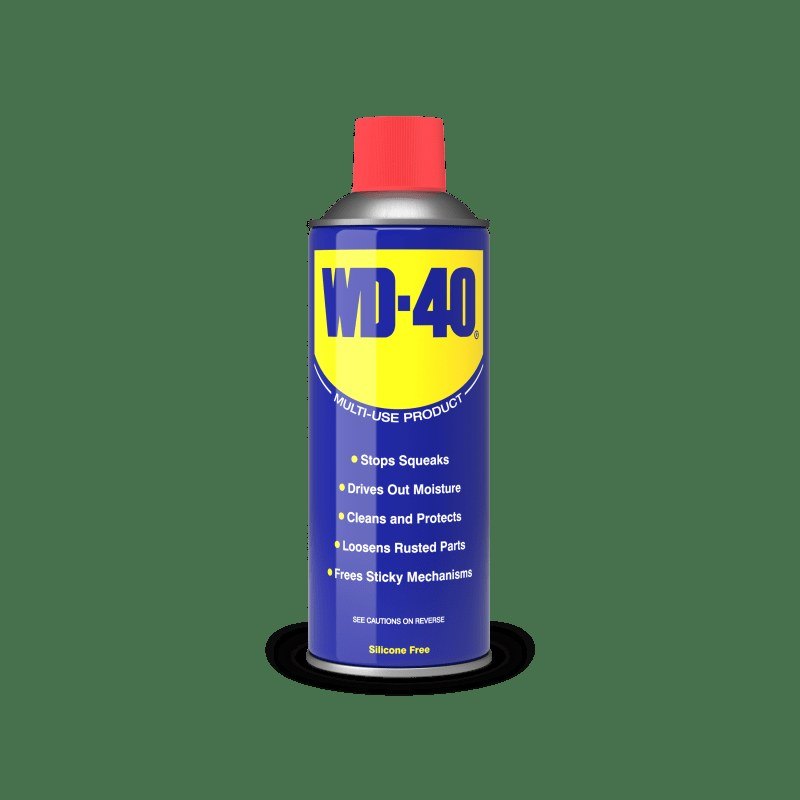
- WD-40 Multi-Use
- clean cloth, gloves
- knife and tape measure (if fitting a filter for the first time)
Important: Petrol is highly flammable: work on a cold engine, outdoors or in a well-ventilated place, away from flames and sparks, and do not smoke. Pull the spark plug cap off so the engine cannot start accidentally.
Step 1
Remove the old filter
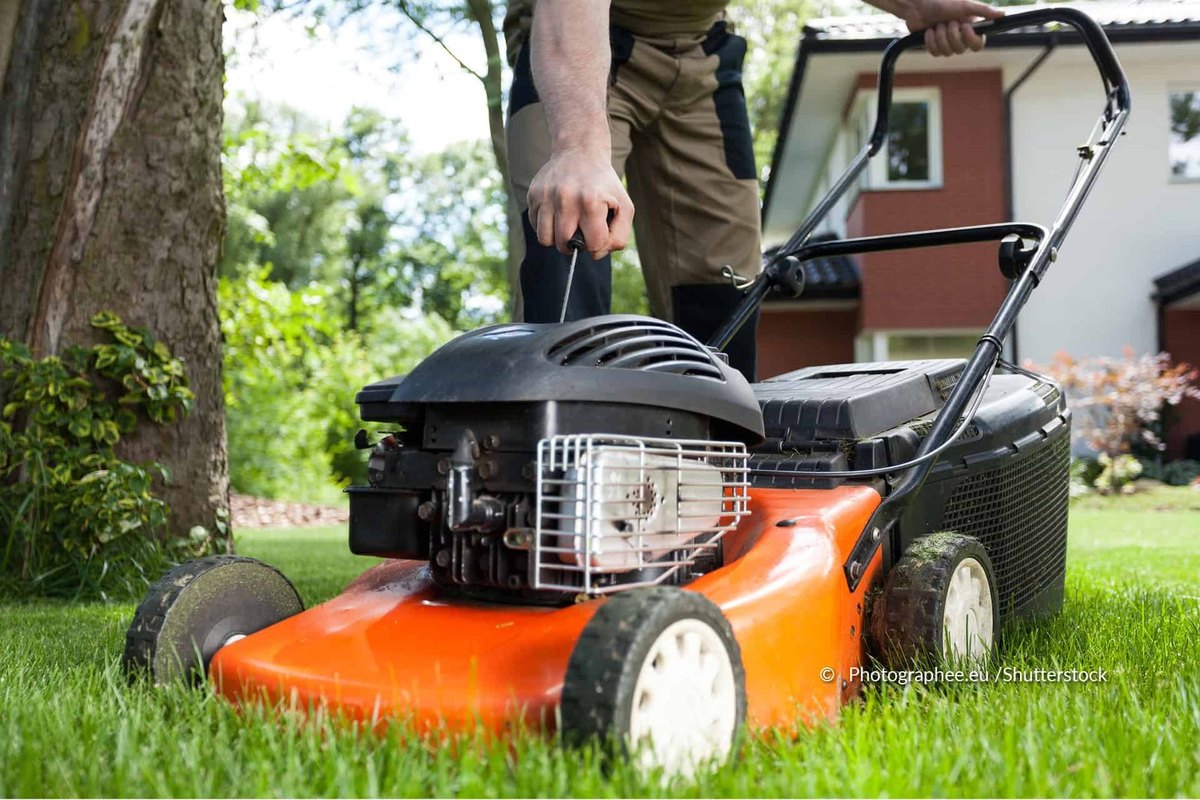
The small filter sits in the fuel line from the tank to the carburettor, usually after the fuel tap. It is held by two metal spring clips at the hose ends: one on the tank side and one on the carburettor side.
Clean the area thoroughly by spraying WD-40 Multi-Use and wiping with a cloth so that no dirt gets into the line while you work. Close the fuel tap. Squeeze the clip tabs with long-nose pliers, slide the clip along the hose and pull the hose off the filter. Repeat on the other side.
Step 2
Choose the new filter
The new filter should be close in shape and size to the old one, as space under the cover is usually tight. Among the types available, the most effective have a small magnet inside the bowl as well as the filter element: it traps metal particles, which are especially harmful to the engine.
Step 3
Fit the filter
Slide the clips onto them and move them a few centimetres back from the end. Push the filter spigots into the hose. The correct direction is shown by an arrow on the filter body: it should point towards the carburettor.
Step 4
Secure the clips
Once the spigots are firmly in the hose, squeeze the clips with the pliers again, move them towards the filter and release them over the hose where it covers the spigots. Open the fuel tap and check for any petrol leaks.
Step 5
Start and check
Refit the spark plug cap and start the mower. It may not fire straight away, as the fuel needs time to fill the system. If the engine has a primer bulb, press it a few times. The engine should start and run smoothly. Do not worry if the filter is only half full of petrol while running: that is normal.
Step 6
If there is no filter
Many mowers only have a mesh under the filler cap that catches larger debris. If there is room, you can add a filter. Close the fuel tap, choose a straight section of hose, measure the length of the filter body without its spigots and cut out a piece of hose of the same length.
Tip: Wipe the filler cap and neck with a cloth before every refill: far less dirt will get into the fuel. Metal clips and the fuel tap are easy to protect from moisture with a fine jet of
WD-40 Smart Straw.
What next
Check the filter at the start of the season and before winter storage, and replace it if it is visibly dirty. For winter, drain or stabilise the fuel and treat the engine's metal parts with WD-40 Multi-Use against corrosion.
These uses come from the experience of WD-40 users in many countries. Always follow the instructions and warnings on the product label.
More guides in «How to use».