A garden hose is exposed to water, sun and soil every day. The plastic cracks, and metal fittings, brass ones in particular, gradually build up a green or black deposit. Oxidised threads are hard to screw on, the joint starts to drip and the connector can seize onto the tap.
Hard water scale and oxidation can be removed with ordinary white vinegar, after which the metal can be protected so the problem does not come back.
Connectors oxidise especially fast where the water is hard and where the hose lies directly on damp ground. The whole job takes a few hours including soaking, but only about twenty minutes of actual work.
What you will need
Important: Do not soak for more than three hours, as the acid starts attacking the metal itself. Soak aluminium connectors for no more than 20-30 minutes and wear gloves.
Step 1
Disconnect the fittings
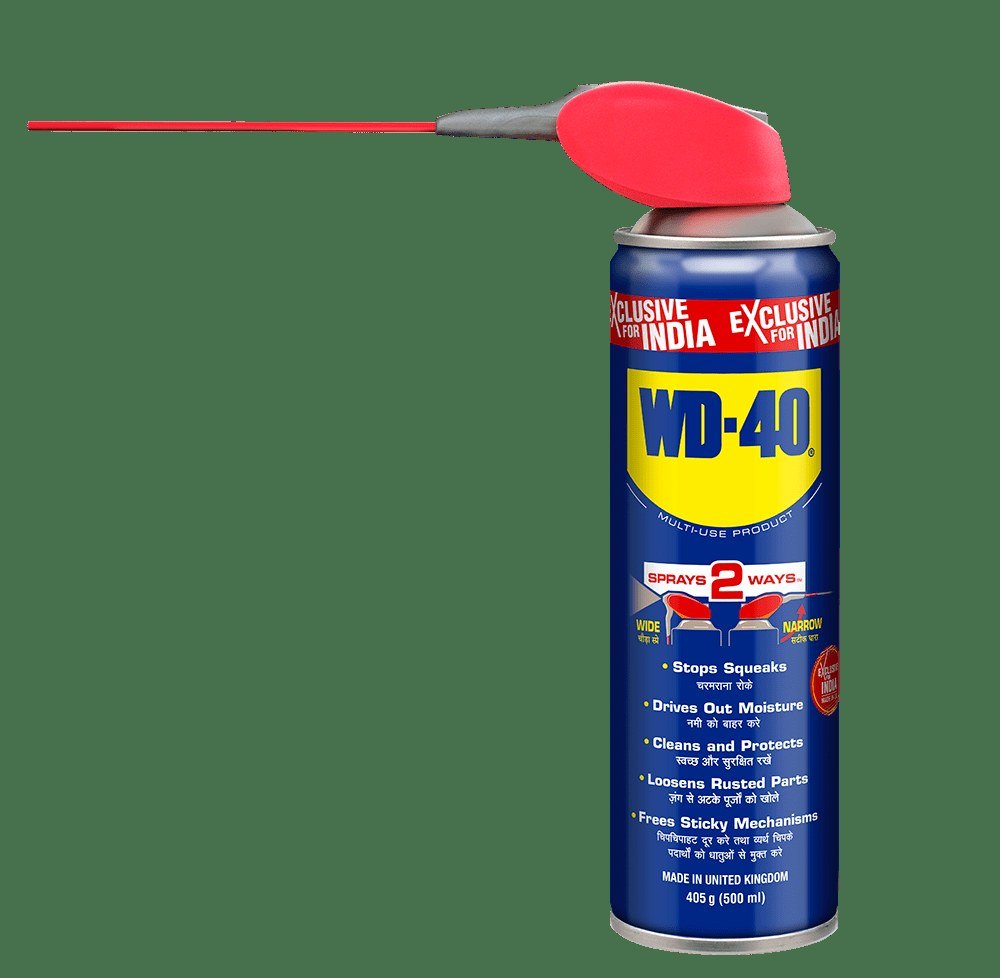
Turn off the water, disconnect the hose from the tap and remove the fittings if they are detachable. If a connector has seized onto the tap, apply WD-40 Multi-Use to the thread, wait 5-10 minutes and unscrew it. The thin straw of WD-40 Smart Straw gets the product right into the thread.
Step 2
Soak in vinegar
Pour undiluted white vinegar into a bowl and dip the corroded hose end or connector so the liquid fully covers the affected area. Treat the other end separately.
Step 3
Let the vinegar work
The soaking time depends on how bad the oxidation is: a light deposit dissolves in half an hour, heavy build-up needs longer, but no more than three hours. Check progress now and then and work over the thread with a toothbrush.
Step 4
Rinse and dry
Rinse off all the vinegar with clean water, otherwise acid residue keeps eating into the metal. Wipe the fittings with a cotton cloth and let them dry completely. Check the rubber washers and replace any that are cracked.
Step 5
Protect the metal
Apply WD-40 Multi-Use to the outer and inner surfaces of the connector, especially the thread. It displaces moisture and leaves a thin protective film, so the thread turns easily. Treat the rubber washers with WD-40 Specialist Silicone: silicone is safe for rubber and stops it drying out.
If stains remain after the vinegar, apply WD-40 again and brush: it helps lift remaining deposits and rust.
Tip: In winter, do not leave the hose connected to the tap: water in the connector freezes, distorts the washer and speeds up corrosion. At the end of the season remove the fittings, treat them with WD-40 and store them somewhere dry.
What next
Treat the threads with WD-40 Multi-Use at the start and end of the watering season, and in midsummer too if your water is hard. The fittings will stay bright and the joints watertight.
These uses come from the experience of WD-40 users in many countries. Always follow the instructions and warnings on the product label.
More guides in «How to use».