Tools work hardest in summer: renovations, the garden, the garage, building jobs. They end up covered in dust, grease, resin and dried mortar, while heat and sharp night-time temperature swings add condensation. Put them away like that for autumn, and in damp September and October weather rust will appear within weeks.
The end of the season is the ideal moment for a thorough clean, so your tools wait for the next job clean, protected and in working order.
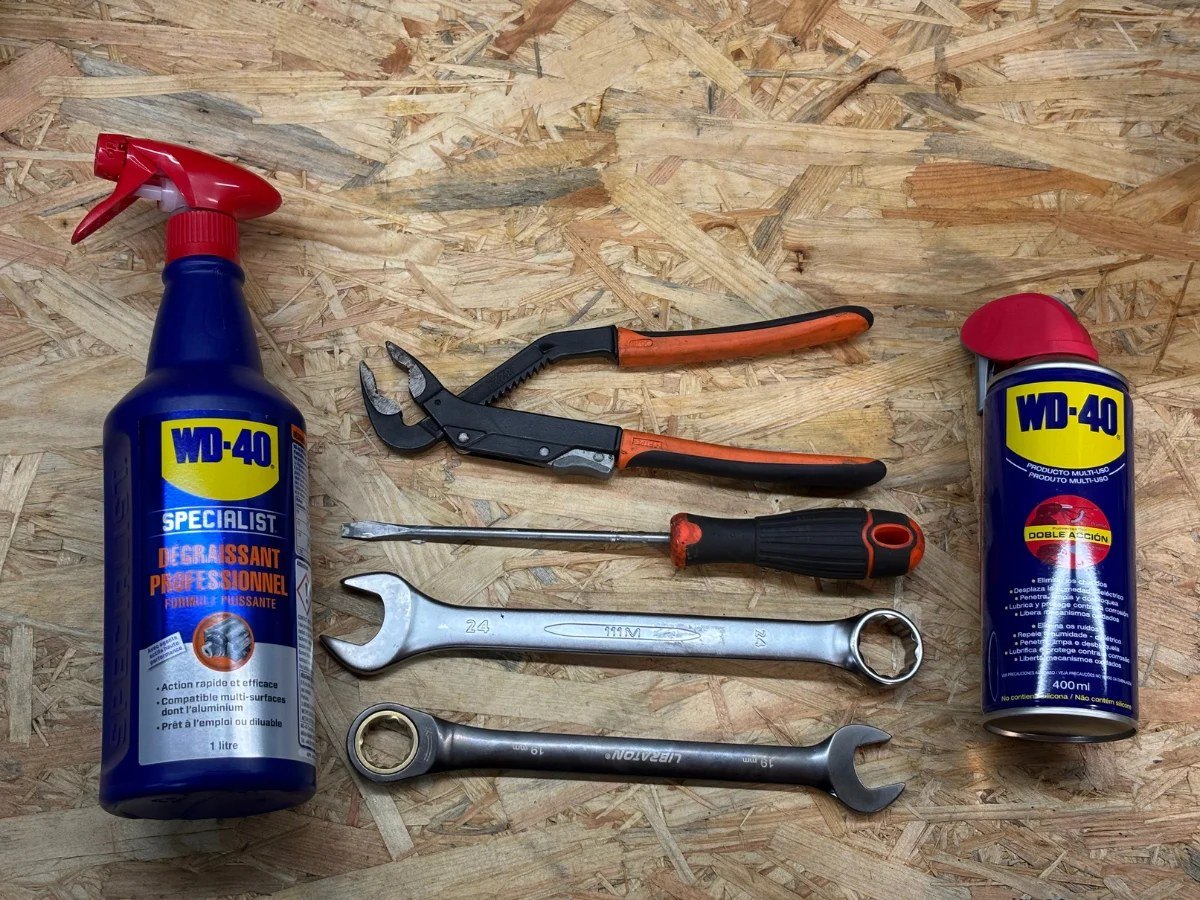
What you will need
Important: Unplug power tools or remove the battery before cleaning. Keep water out of the housing and avoid abrasive powders that scratch metal.
Step 1
Sort and inspect your tools
Lay everything out on one bench and check each item. Set aside those covered in grease, resin or dried dirt, and those already showing rust. Put anything broken aside for repair so you are not hunting for a replacement at the last minute in spring.
Step 2
Wash off dust and surface dirt
Wipe hand tools with a sponge dipped in warm water and mild soap. This removes dust and sand so the next product can work on the greasy grime itself.
Only wipe power tools with a slightly damp cloth, and blow out or brush the ventilation slots dry.
Step 3
Dissolve grease and resin
Spray WD-40 Multi-Use onto areas with old grease, resin and sticky film. Give it a minute to work, then scrub with a stiff brush and wipe the dirt away with a cloth.
Treat seized pivots, adjustment screws and nuts with WD-40 Specialist Penetrant and give it 10-15 minutes.
Step 4
Rinse and dry thoroughly
After degreasing, rinse hand tools in clean water and wipe them dry with microfibre straight away. Leave them somewhere warm for an hour so gaps and joints dry out, as trapped moisture is the quickest route to rust.
Step 5
Protect and lubricate
Once the tools are completely dry, apply a thin coat of WD-40 Multi-Use to all metal surfaces. The film displaces moisture and holds back oxidation through the autumn. Work the product into joints, locks and adjusters through the WD-40 Smart Straw and operate each mechanism a few times.
Refresh the switches and contacts of power tools with WD-40 Specialist Contact Cleaner: it removes dust and oxidation and evaporates quickly.
Step 6
Put them away properly
Store tools in a dry room, off the concrete floor and away from walls that get cold. Cover cutting edges with guards and keep batteries separately somewhere warm.
Tip: Do not overdo it: a thin, even coat protects better than a thick one that collects dust. Always wipe off the excess with a clean cloth.
What next
After every heavy job, a wipe and a light spray of WD-40 Multi-Use is enough. Give your tools a full clean twice a year: after summer and before the spring season.
These uses come from the experience of WD-40 users in many countries. Always follow the instructions and warnings on the product label.
More guides in «How to use».