A key that goes in stiffly and needs force to turn is the first sign that a lock needs attention. Dust and grit get into the mechanism, old lubricant thickens, and outdoor locks also face moisture, condensation and frost. Without care the cylinder wears, and one day the key may not turn or may snap inside.
Prevention is simple: lubricate locks once or twice a year, and front doors and gates in autumn before the frosts. This guide works for door cylinders, padlocks, gate locks, safes and furniture locks.
What you will need
Important: If the lock was previously treated with graphite powder, blow out the residue thoroughly first: graphite mixed with a liquid lubricant turns into a thick paste. Do not use products on electronic locks without checking the manufacturer's instructions.
Step 1
Check the lock
Make sure the handle and escutcheons are secure: a loose mechanism is often mistaken for a sticking cylinder. Insert the key and turn it a few times. Feel where it catches: on the way in or as it turns. If the key is bent or worn, have a new copy cut from the original, as lubrication will not fix that.
Step 2
Clean the mechanism
Blow compressed air into the keyway to clear dust, sand and old graphite. There is no need to dismantle the lock. Wipe the key clean too: it carries whatever is on it into the cylinder.
Step 3
Free a seized lock
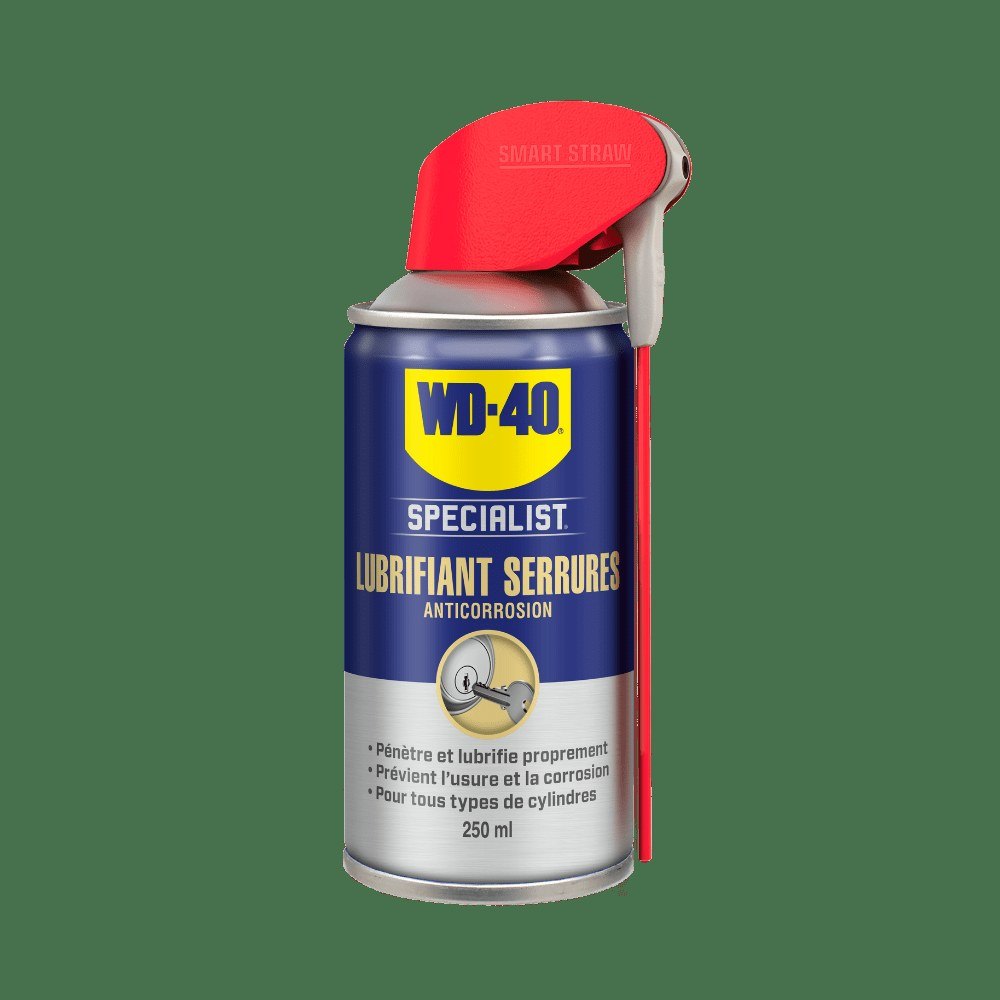
If the key barely turns or you can see rust, apply WD-40 Specialist Penetrant. Put the straw into the keyway and give a short burst, and on a padlock into the shackle holes as well. Wait a few minutes, then gently work the key back and forth without forcing it. Repeat if needed. Never use force: a key snapped in the lock is a much bigger problem.
Step 4
Lubricate the lock
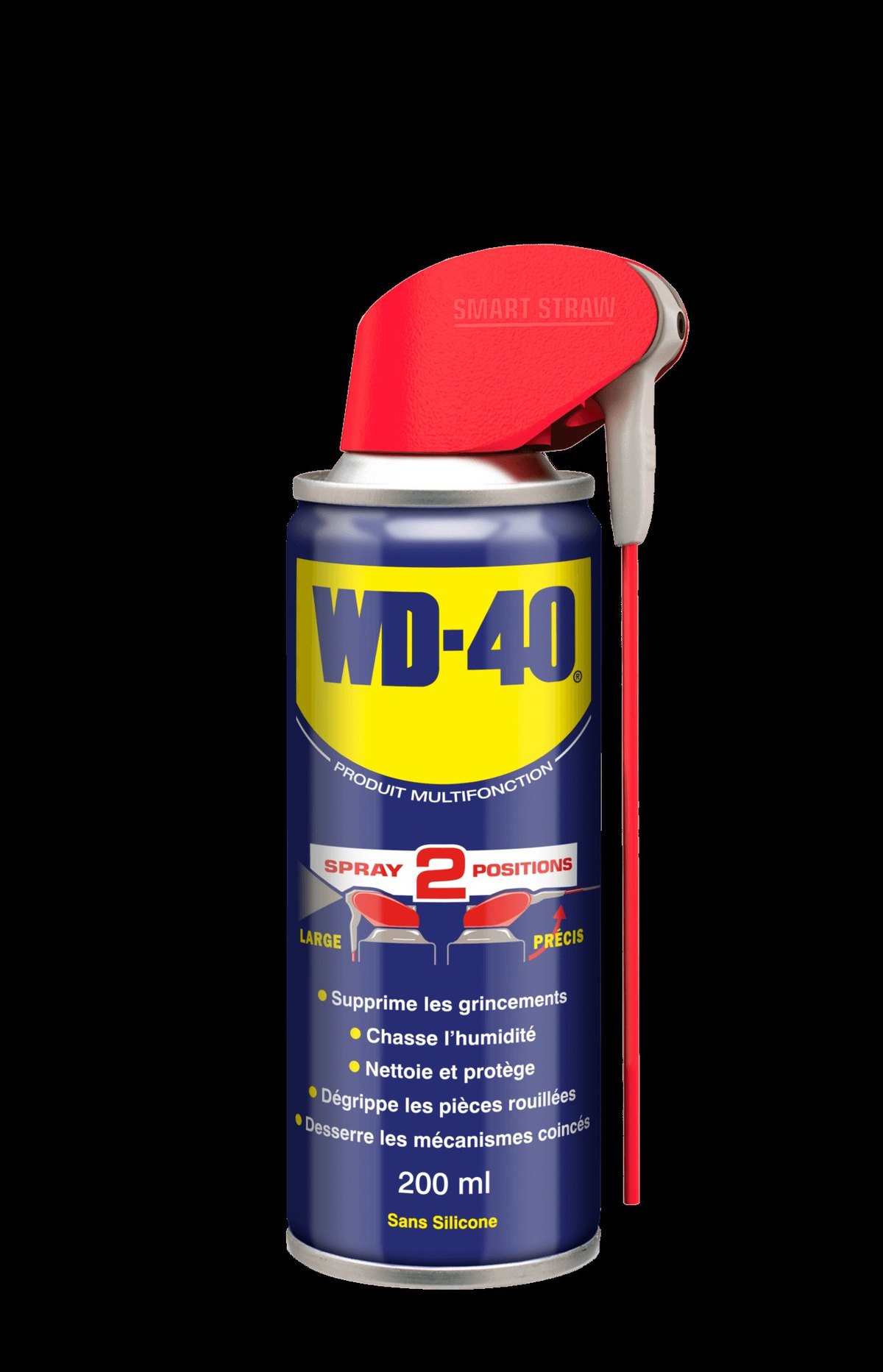
Once the mechanism moves freely, apply WD-40 Smart Straw to the cylinder: raise the straw and give one or two short bursts into the keyway. It penetrates between the pins, displaces moisture and protects the parts from corrosion. Insert the key and turn it several times in both directions to spread the lubricant. With the door open, treat the latch and bolt as well.
Step 5
Remove the excess
Take out the key and wipe it, then wipe the face of the lock. Excess on the surface attracts dust, so less is better. Check that the key now turns easily and evenly.
Tip: Before winter, treat outdoor locks, gates and garage doors: the product drives moisture out of the mechanism, leaving nothing to freeze. Keep
WD-40 100 ml in the car or your bag: if a lock does freeze, a quick spray helps open it. For general care of hinges, use
WD-40 Multi-Use.
What next
Lubricate locks once or twice a year, and outdoor ones before every cold season. While you are at it, treat the door hinges so they do not squeak.
These uses come from the experience of WD-40 users in many countries. Always follow the instructions and warnings on the product label.
More guides in «How to use».