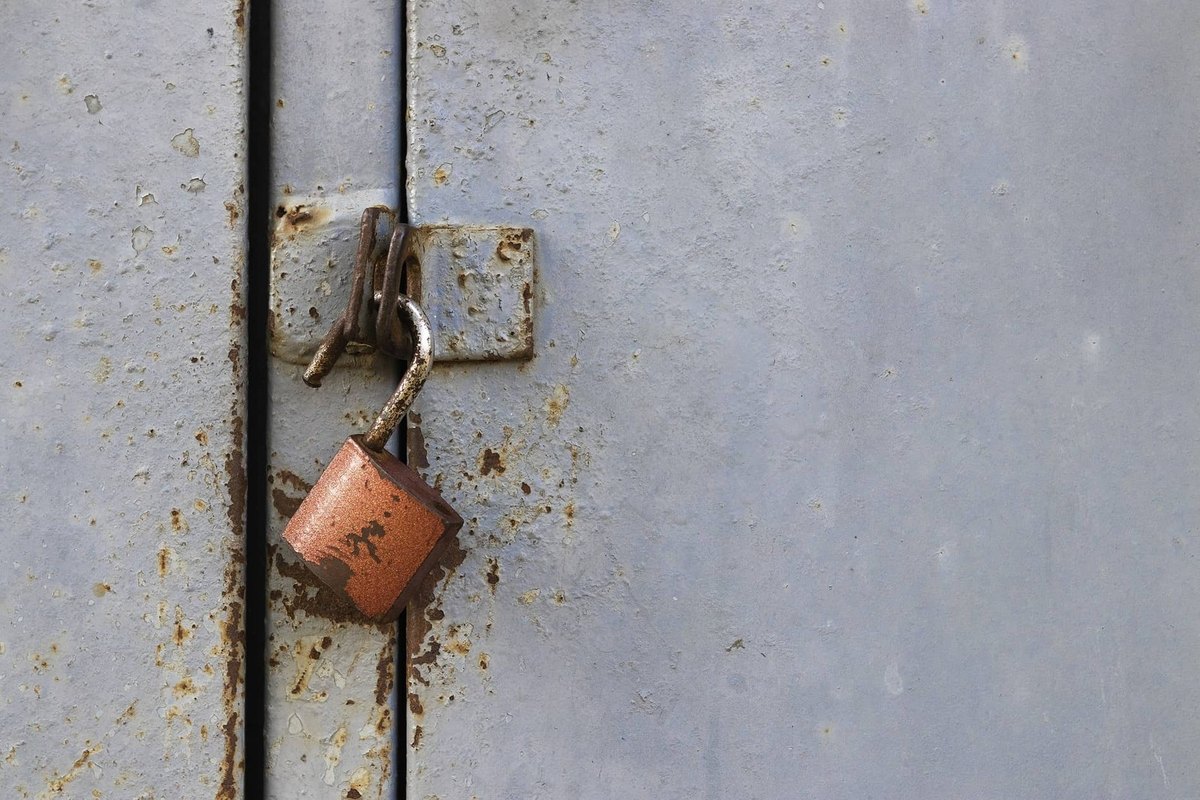
A padlock on a garage, shed, gate or cellar spends the whole year outdoors. Rain, fog, temperature swings and winter road salt slowly take their toll: rust forms in the cylinder, the key goes in stiffly and the shackle no longer springs open. It always seems to jam just when you need the door open in a hurry.
Before calling a locksmith or reaching for bolt cutters, try saving it. In most cases a padlock can be freed in 15-30 minutes: clean it, soak it with penetrating lubricant, tap it gently and put it back to work. Here is how.
What you will need
Important: Do not heat the lock with an open flame while any aerosol product is on it: the spray is flammable. Do not strike the body hard, or you may damage the pin springs or hurt yourself.
Step 1
Clean the body
Wipe the padlock with a cloth and brush the body, paying attention to the keyhole and the shackle holes. Sand, soil and salt crystals inside often block the key as much as rust does.
If dirt has dried on, give it a short spray of WD-40 Multi-Use, wait a minute and wipe again.
Step 2
Remove surface rust
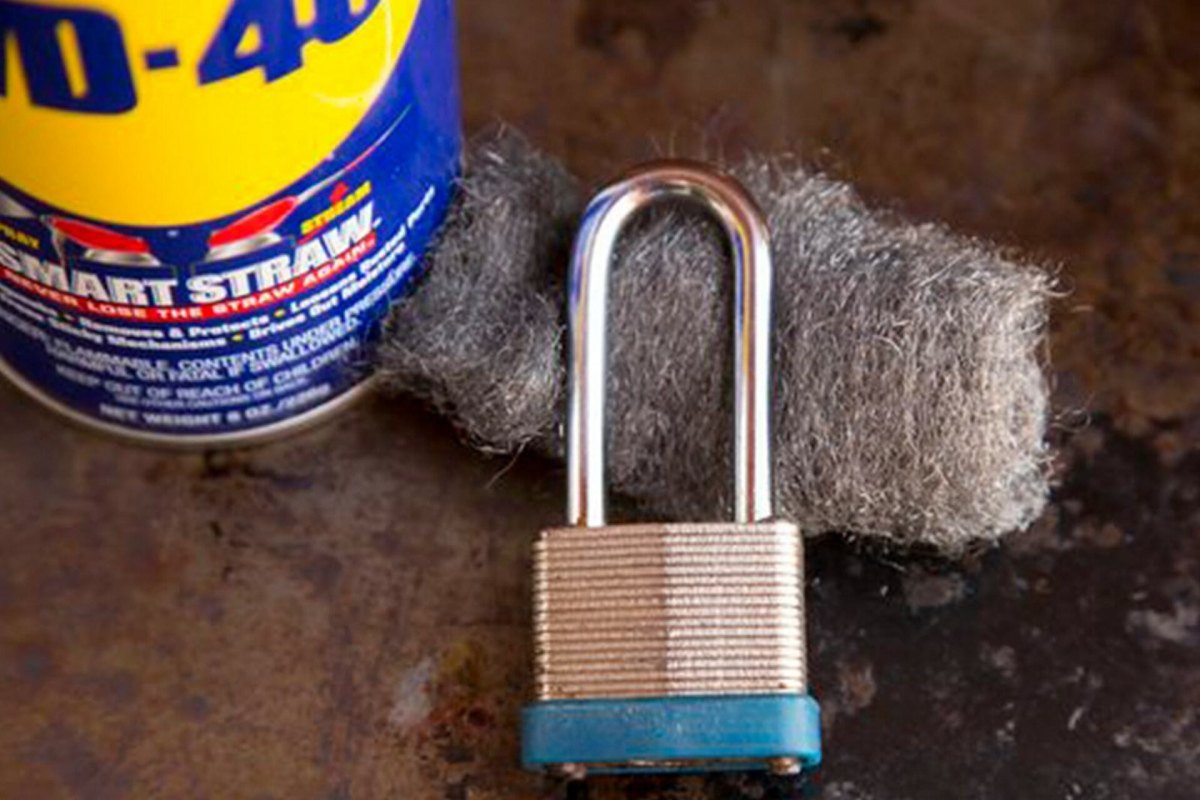
Use fine sandpaper to remove loose rust from the body and shackle. This is not just cosmetic: deposits where the shackle enters the body also stop it from coming out. Wear gloves and work carefully around the keyhole.
Step 3
Soak the cylinder with penetrant
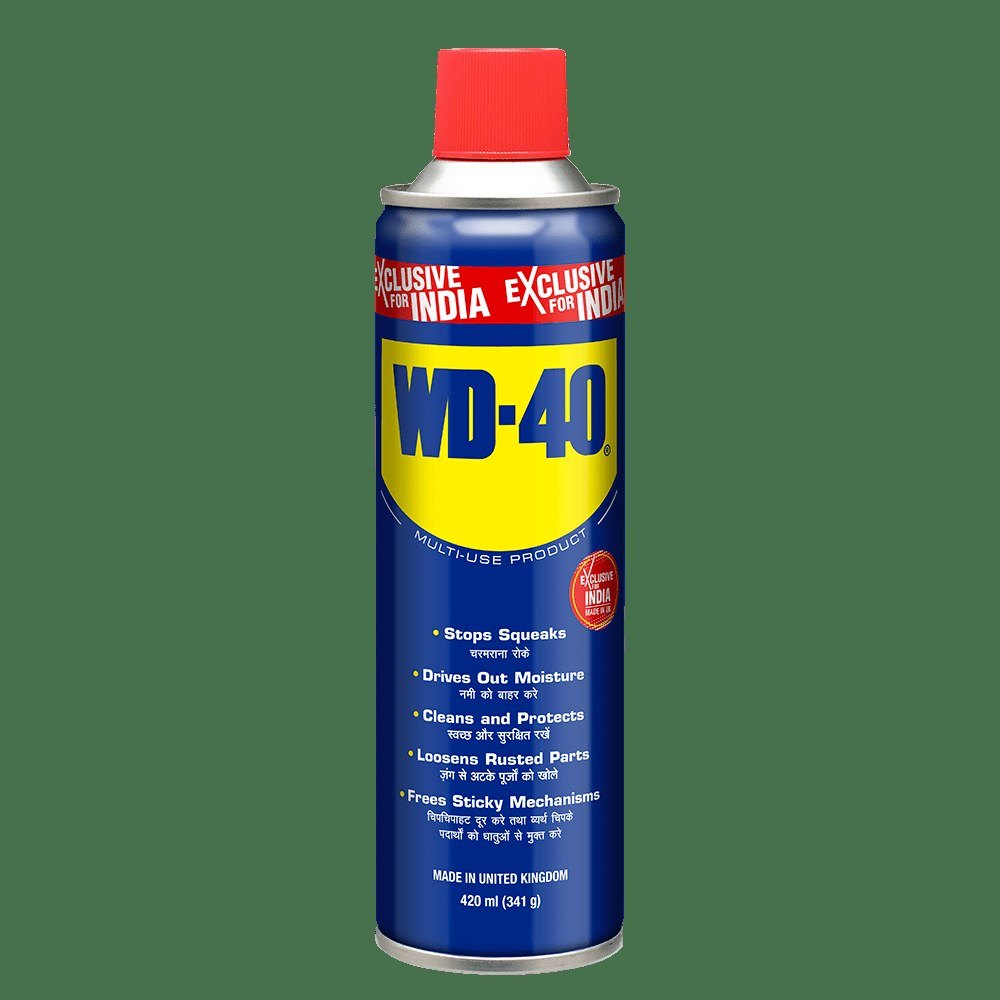
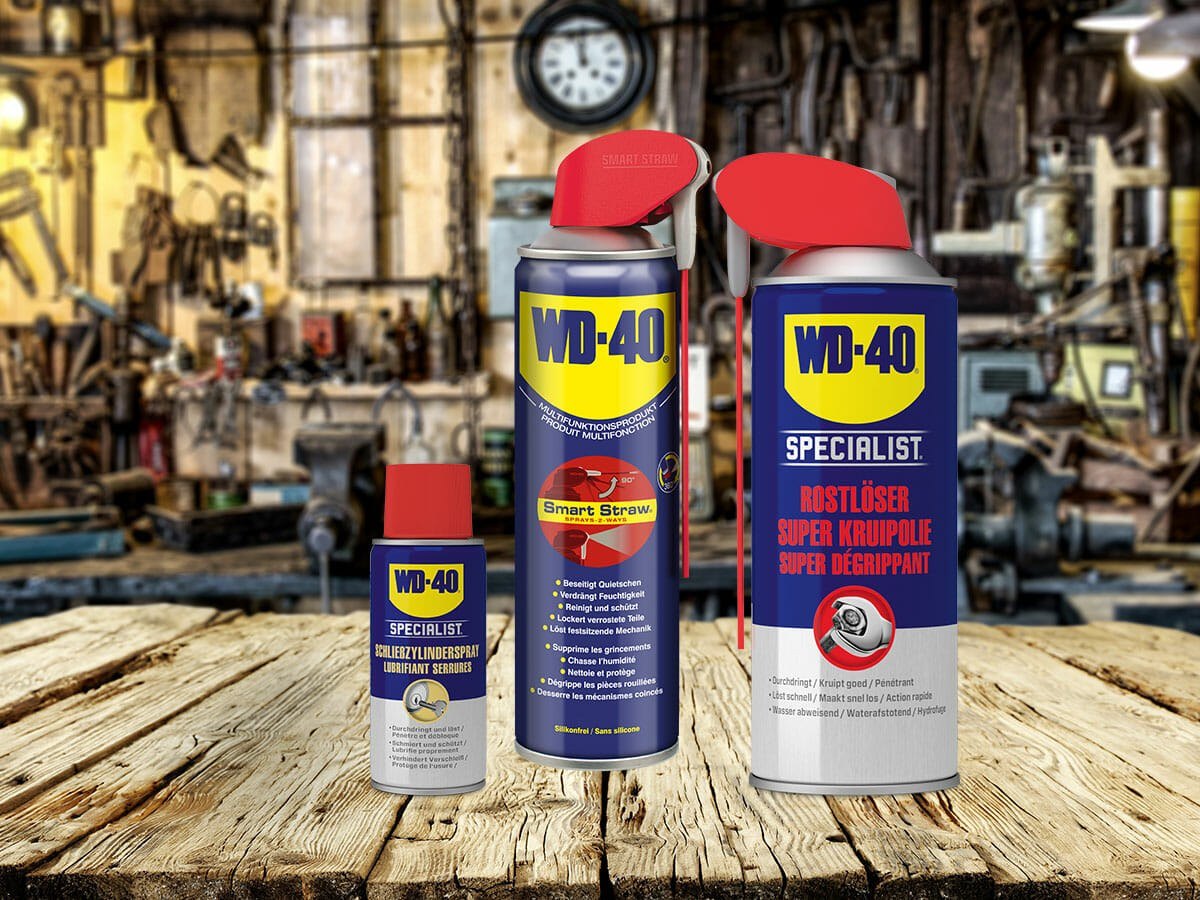
Insert the thin straw into the keyhole and give a short burst of WD-40 Specialist Penetrant. It quickly creeps into the gaps between the pins and softens the rust. Little is needed: if liquid runs out, you have used too much.
Treat the shackle holes as well. A loose padlock can be left to soak in a container of lubricant for a few hours; if it hangs on a chain, turn it cylinder up so the product runs inside.
Step 4
Wait, then tap lightly
Leave it for 5-15 minutes, longer if the rust is heavy. Then tap the body and shackle lightly with a hammer a few times. The vibration breaks up rust particles inside and helps the lubricant work deeper.
Step 5
Open it with the key
Insert the key and turn it gently both ways without forcing, so it does not snap in the cylinder. If it will not move, repeat the treatment and tapping. Once the key turns, hold it in the open position and tap the shackle lightly while pulling it out of the body.
Step 6
Lubricate and protect
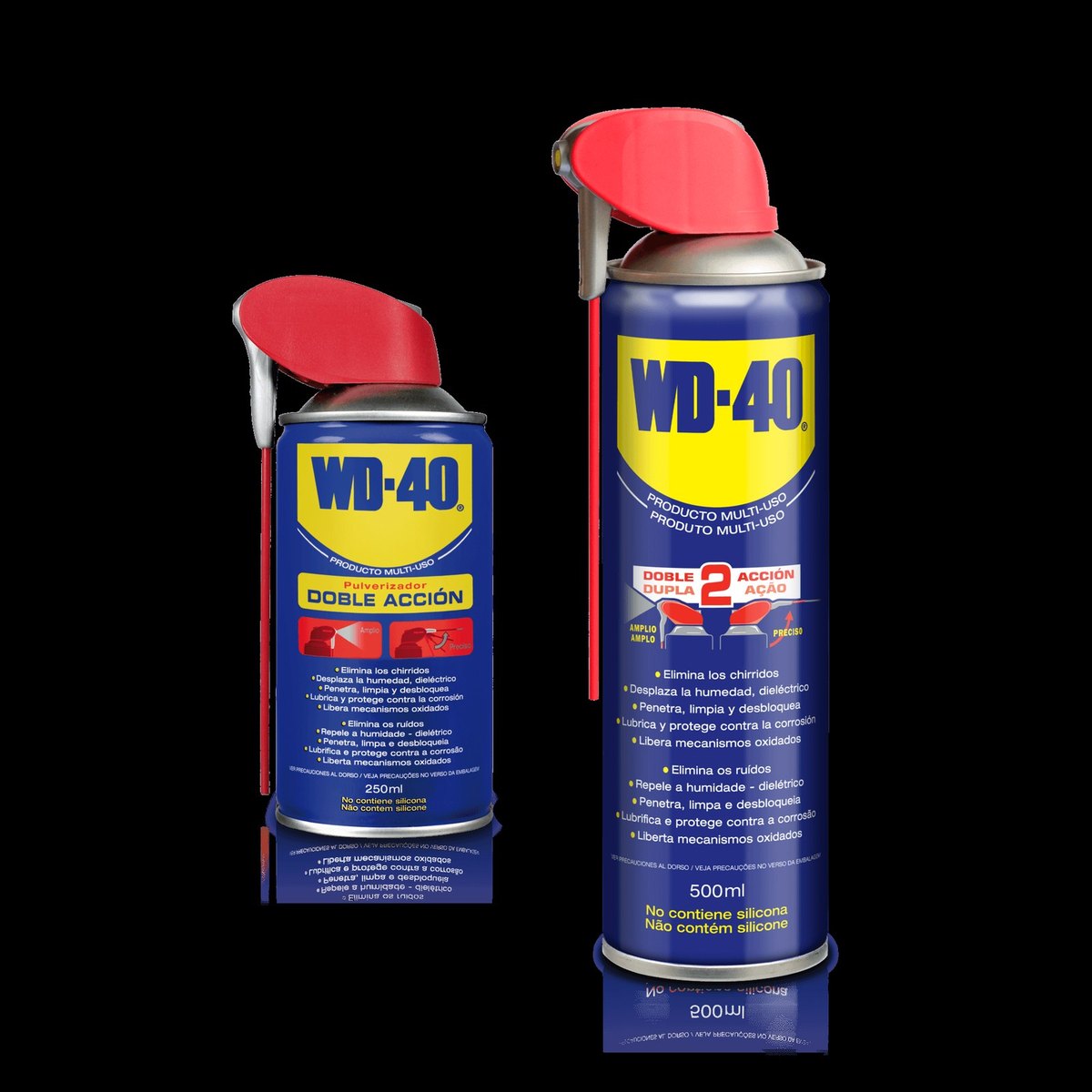
Once open, turn the key and work the shackle several times. Then apply WD-40 Multi-Use into the keyhole, onto the cylinder and into the shackle holes, and wipe off the excess. The film displaces moisture and reduces the risk of the lock freezing in winter.
Tip: If the key will not go in even after lubricating, shine a torch into the keyhole: there is often a small stone or a cobweb inside. Blow the debris out first, then treat again. A badly rusted padlock that needed rescuing is best replaced and moved to a less important door.
What next
To stop this happening again, treat outdoor locks twice a year: in autumn before the frosts and in spring after the salt and slush season. WD-40 Smart Straw with its straw is handy for this, and the same can keeps door hinges and bolts working too.
These uses come from the experience of WD-40 users in many countries. Always follow the instructions and warnings on the product label.
More guides in «How to use».